



One enduring contribution of Black Americans is stand-up comedy that points a crucial mirror toward society. From “Chitlin’ Circuit” pioneer Moms Mabley (1920s–60s) to mainstream groundbreaker Eddie Murphy (1980s) and beyond, a legacy of side-splitting social commentary continues through the work of current standup king Dave Chappelle and others.
In fact, Chappelle’s new Netflix special, surprise-released in December, was treated as a major cultural event and a timely test of free speech. For boldly exploring every hot-button topic imaginable, Dave Chappelle: The Unstoppable was aptly called an “unfiltered cultural reset we didn’t know we needed.”
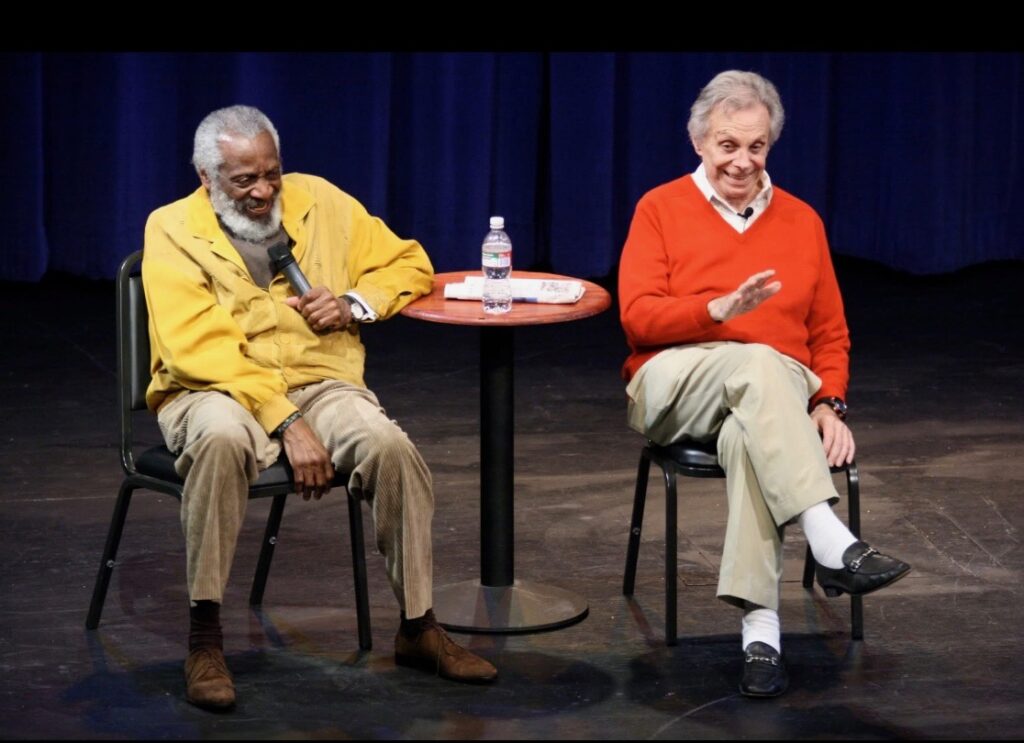
“Any assumption, you can turn it upside down when you hear someone from a very different background,” says Lucy Mercer, whose Throckmorton Theatre in Mill Valley has long presented the acclaimed Tuesday Night Comedy series. Every week, unannounced comics try new material, free from the expectations of shows at the Punchline or Cobb’s. The theater has hosted notable names like Chitlin’ Circuit legend Dick Gregory, Robin Williams and Dana Carvey. More recently, the venue has seen newer faces take the stage, like the Bay Area’s Bryant Hicks, Kirk McHenry and Marcus Howard.
“To have all these voices mixing in, it makes our lives much richer,” Mercer says. “And it helps us understand each other better.”
Indeed, Black comics, onstage and onscreen, have been instrumental at shattering stereotypes and spreading empathy across demographics. It was revelatory, for instance, to hear the everyday experiences of young Black girls as described by Whoopi Goldberg, who developed her beloved one-woman show while living in Berkeley in the late 1970s.
“I remember listening to Whoopi Goldberg, and she had a bit where she was a little girl with a towel wrapped around her head and pretended the towel was her long, luxurious hair,” says Ellen Cleghorne, who was in town last month for SF Sketchfest’s “The Women of SNL” tribute. “It resonated with me. How many times had I done that? She saw me. She was us.”

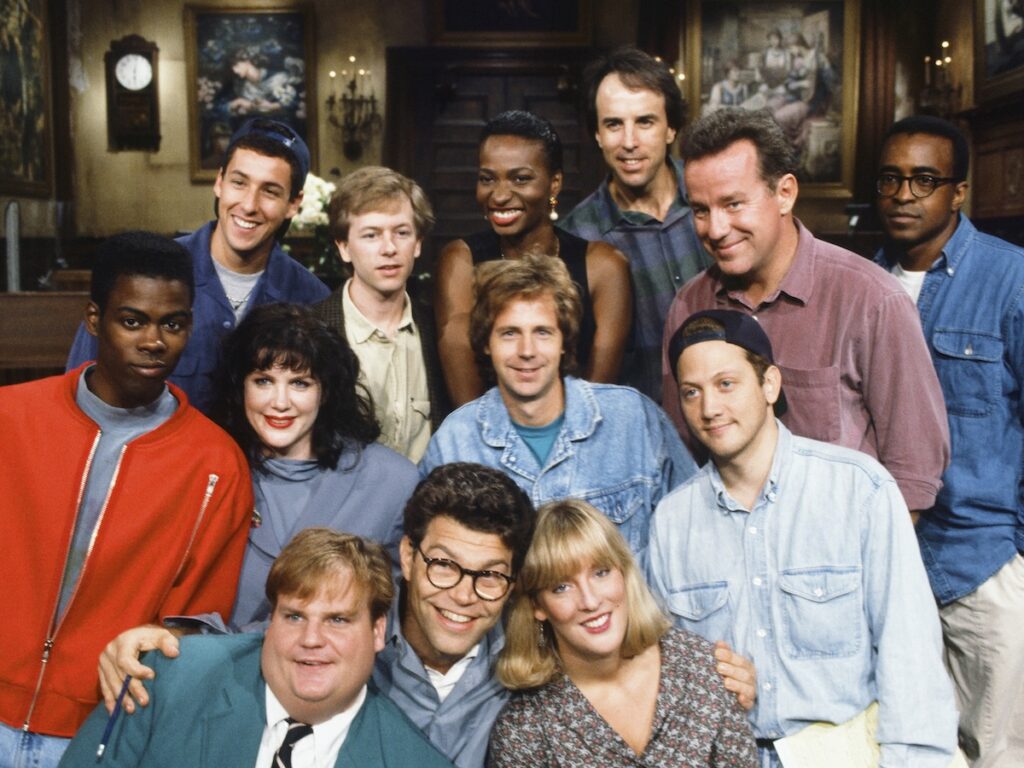
After paying her New York stand-up dues, Cleghorne appeared on all three of the 1990s important showcases for Black comedians: In Living Color, Def Comedy Jam and of course, Saturday Night Live. As SNL’s first longtime female Black cast member, Cleghorne manifested more Black representation than ever before, along with Tim Meadows and stand-up GOAT contender Chris Rock. Rock’s 1996 show Bring the Pain was a defining moment in the stand-up special being considered an artform.
“I recently saw Rock and Kevin Hart in concert in Brooklyn, and Rock talked about his mom in pre-segregation America, and the applause was thunderous,” says Cleghorne, who’s hard at work on a new special. “Great Black comics craft bits that turn shared trauma into joy and a sense of community.”
Local Influence
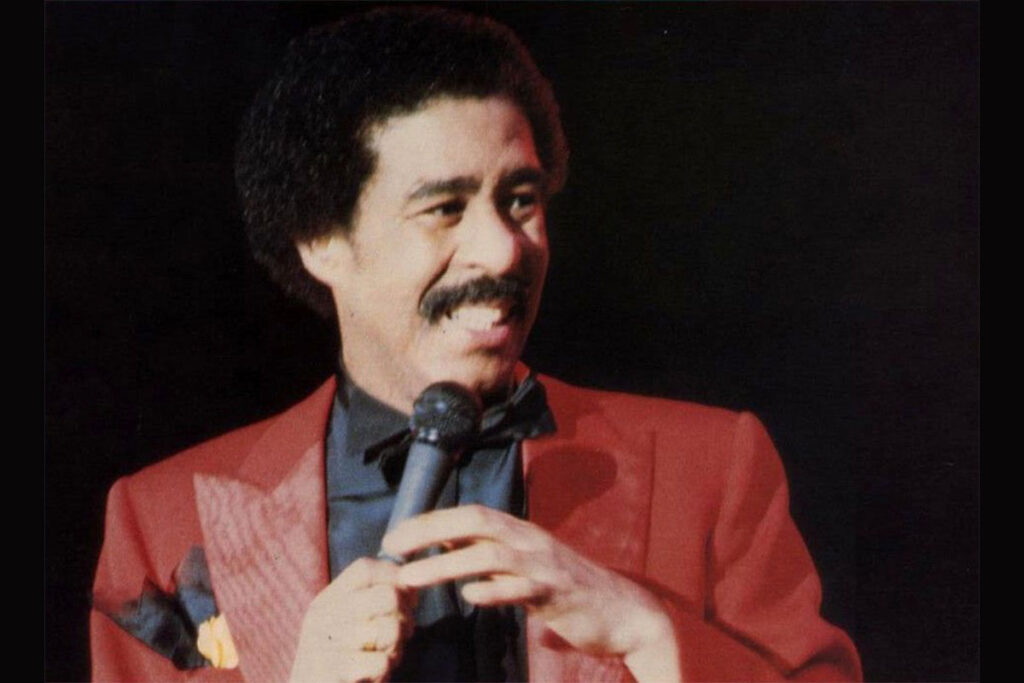
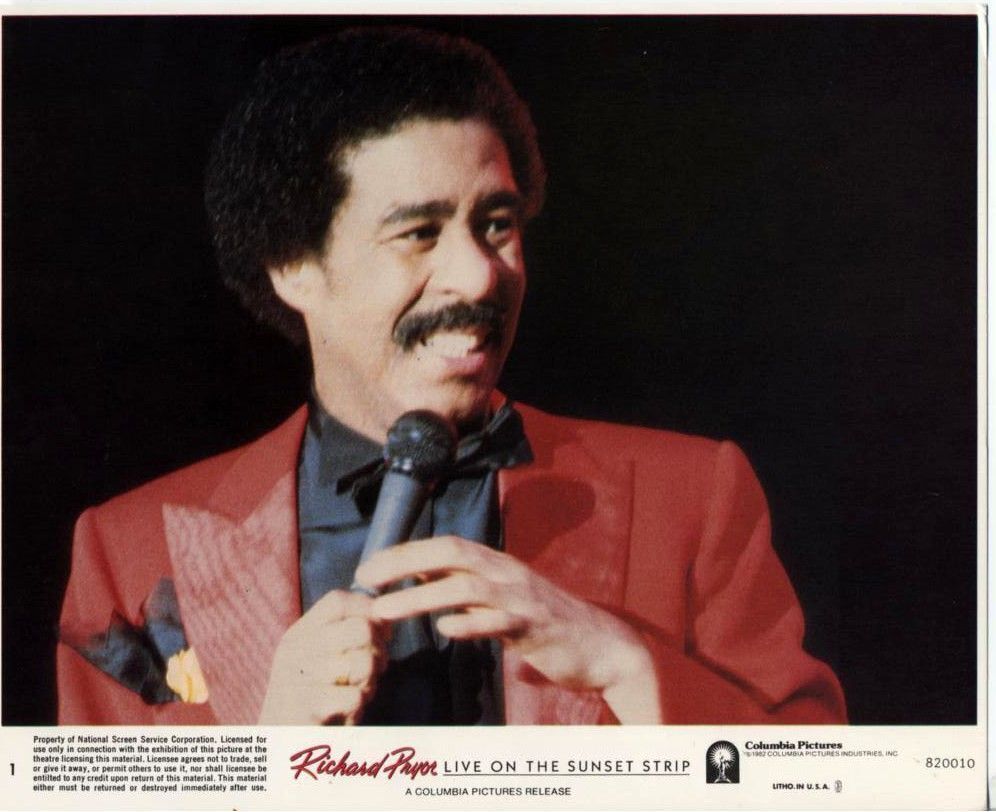
The Bay Area, in particular, has always nurtured the art and cultural impact of stand-up comedy. While San Francisco’s North Beach was the site of Lenny Bruce’s famous arrest for obscenity in 1961, it’s also home to iconic clubs like the Purple Onion, where Richard Pryor himself honed his unique mix of pathos and cultural criticism.
Widely acknowledged as the best standup comic of all time, Pryor was a disciple of Bill Cosby’s style before finding his own voice while living in Berkeley in the late 1960s, and was inspired by counterculture friends like Black Panthers co-founder Huey P. Newton and author Ishmael Reed.

“Pryor’s stand-up really reflected an activist kind of a spirit that I think then has influenced everybody from John Stewart to Dave Chappelle,” says Nina G, comedian and co-author of Bay Area Stand-Up Comedy: A Humorous History. “For me personally, as a disabled comic, that’s who I look toward. Like, ‘Okay, that’s how to be funny and to teach people and to advocate for rights.’”
The progressive spirit of Bay Area comedy continues in artists like Oakland’s W. Kamau Bell, a Peabody and Emmy winner. But Black standup remains a global force, and one that Philly comic Coleman Green considers more vital as ever.
“In this regressive age — where algorithms are running the culture, and people are scared to even breathe wrong on stage — the Black comedian might be one of the last honest storytellers,” Green says. “We’ve always took pain, confusion, racism and absurdity, and flipped it into laughter. It’s cultural alchemy. Where other folks see despair, we see material.”
Click here for info and tickets to Tuesday Night Comedy in Mill Valley.