
As a Marin mom of two, a tech entrepreneur (who has built companies acquired by Google and Pinterest) and a Trustee at GATE Academy, I spend a lot of time thinking about kids and their screen time.
So when I run into days, or even weeks, where my kids are out of school, but I still have work, I often turn to low-lift project ideas. These activities allow me to step back and instead task my kids with taking charge of their own playtime.
Here are some age-aligned activities that I have tried and tested with my own kids. They are designed to help your young one discover the joy of independent play, all the while allowing you to get work done throughout the day. A win, win!

Questions to ask your child(ren) before they get started
- “What is your vision for this?”
- “What is the first small step to make that vision real?”
These two questions can help your young one to slow down, think ahead and take ownership of what they’re about to make. They’ll also go into the activity with a level of confidence and focus.

Suggested timeframes
The times listed below are guidelines, not hard and fast rules. When my children were younger, I started with 20 minutes of independent play at a time and built on that. It’s important to remember that every child is different and will start from a different place.

The Architects of Little Worlds
Floor-Sized Urban Planning
Time: 20–120 minutes
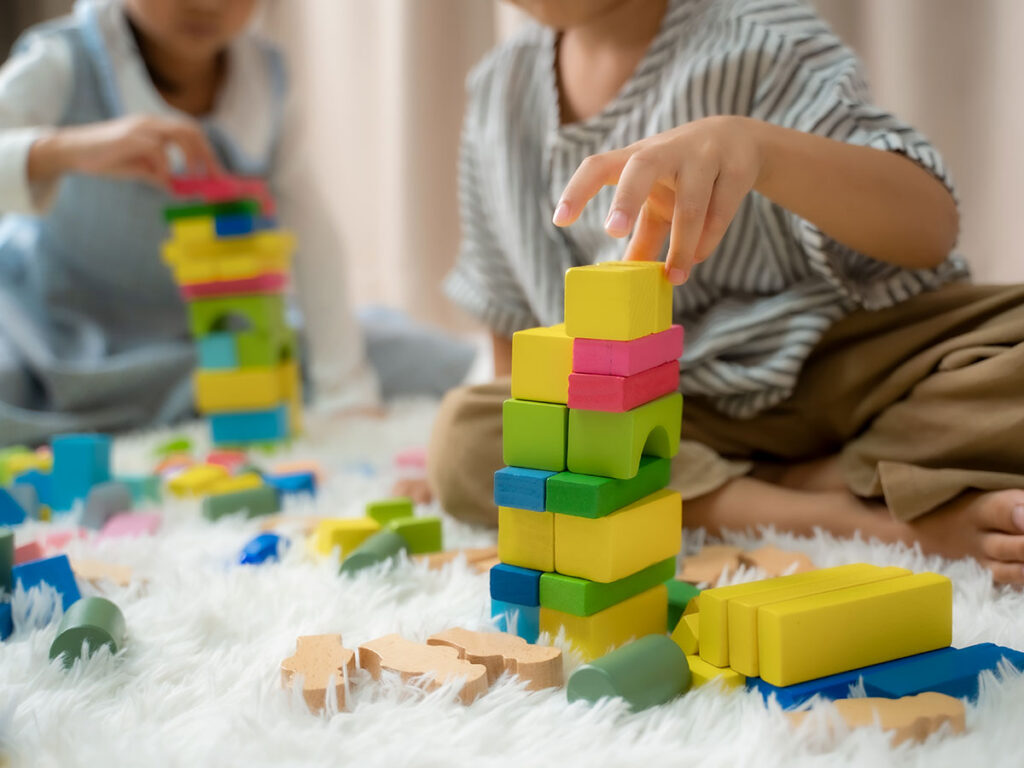
Parent Prep: Tape out a road network on the floor or back patio. Scale it for tiny cars or ride-on vehicles. Bring out magnatiles, legos, figurines, chalk (if outdoors), cardboard boxes, essentially anything that can help layer this activity.
The Activity: Get them to build the city around your roads using blocks or boxes.
Ask: Where should the store go? How do cars handle intersections?
The Skill: By physically crawling (or riding) through their creation, they immerse themselves in a world of their own and learn to design their environment.
Potion Station
Time: 20–60 minutes
Parent Prep: Outdoor space or garage, bowls of water, baking soda, vinegar, food coloring, glitter, washable paint, corn starch, spoons.
The Activity: Provide the “ingredients” but no instructions. Challenge them to create a “sleeping potion” or “volcano juice.” Let them mix, pour, react and observe.
The Skill: This is chemistry and sensory regulation, but disguised as magic. It teaches cause and effect (“If I add this, that bubbles”) and encourages refining “recipes” through trial and error.
The “Everything” Box
Time: 20–120 minutes
Parent Prep: Large cardboard box, markers, glitter glue, pipe cleaners, popsicle sticks, easy-to-tear tape, stickers.
The Activity: Ask: “Is this a rocket, a library, or a cave?” Help them cut windows, and then let them do the rest: draw control panels, tape on pipe cleaners, and design the interior wallpaper.
The Skill: Physical containment increases focus. Inside the box, the world fades away and allows them to engage in imaginative play. They also learn that materials like a cardboard box have endless potential.

Curators and Storytellers
Nature Curation & Mandalas
Time: 30–45 minutes
Parent Prep: A basket or tray for collecting.
The Activity: Send them outside with a specific mission: “Find 10 rough items, 10 smooth and 10 green.” Ask them to arrange these into a circular mandala (a geometric, circular design) or museum display.
The Skill: Here they are looking at nature while also observing texture and symmetry. Classifying and arranging objects based on aesthetics is also an early form of data organization.
Narrative Stones
Time: 30-60 minutes (Creation + Play)
Parent Prep: Smooth stones and paint pens.
The Activity: First, they paint stones with symbols (key, moon, cat). Once dry, they pull three at random to invent a connecting story.
The Skill: Weaving different elements into a story draws on skills from writing to coding logic.
Backyard Cartography
Time: 30–60 minutes
Parent Prep: Clipboard, paper, markers.
The Activity: Task them to map the backyard or park. Challenge them to be precise about landmark locations, then hide a treasure marked with an X for you to find.
The Skill: Translating a 3D world onto 2D paper requires complex spatial visualization. It shifts their perspective from participant to observer, helping them to understand how physical spaces are organized.

Inventors and Systems Thinkers
Game Theory & Design
Time: 2–8 hours (Multi-day project)
Parent Prep: Poster board, markers, sculpting clay, notebook.
The Activity: They invent a game from scratch: designing the board, sculpting pieces, and — most importantly — writing the rulebook so it is playable.
The Skill: This is the ultimate critical thinking exercise. They realize a game without clear rules leads to chaos. They must playtest, find “bugs” in their logic and iterate until the game is fair.
The Rube Goldberg Machine
Time: 1–2 hours
Parent Prep: Dominos, string, springs, tape, recyclables, rubber bands, toys.
The Activity: Challenge them to perform a simple task (ringing a bell) in the most complicated way possible using household objects.
The Skill: Resilience and engineering. This task will fail twenty times before it works, teaching them that failure is data for the next attempt. In a world of instant gratification, this analog struggle builds the “grit” necessary for long-term success.
Playwriting & Set Design
Time: 45–90 minutes
Parent Prep: Notebook, old sheets/chairs for sets.
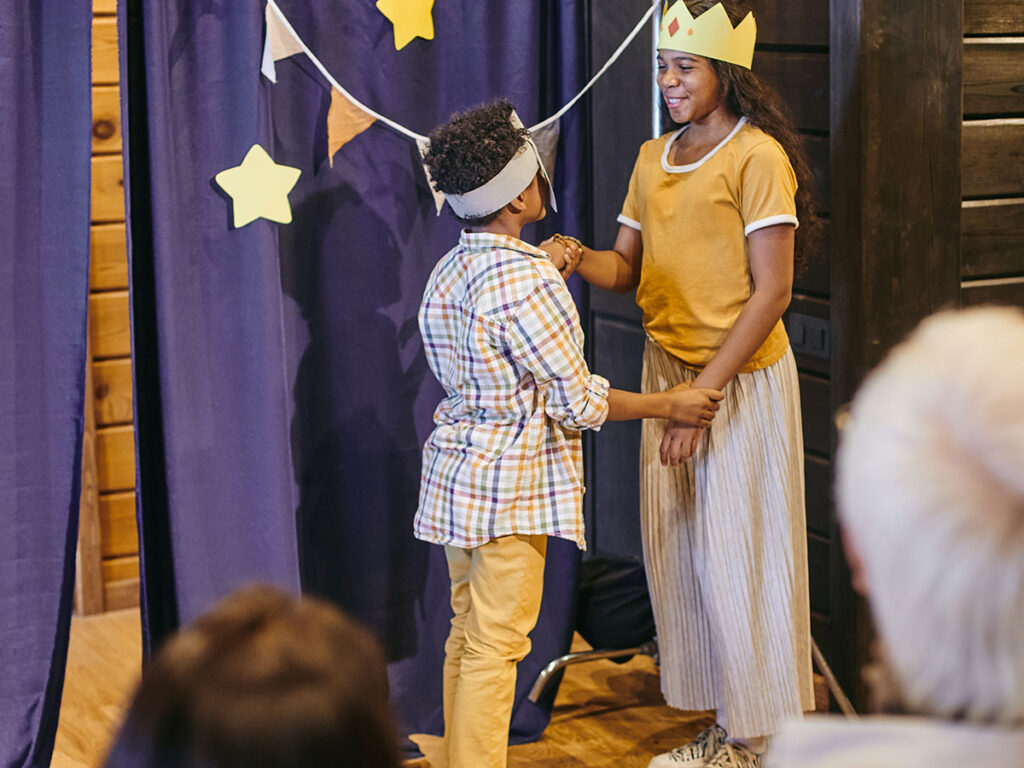
The Activity: Give a prompt like “a misunderstanding at a pizza shop.” They script dialogue, cast siblings/toys, build a set and perform.
The Skill: This fosters voice and collaboration. Writing dialogue requires empathizing with different perspectives. Managing the production — cooperating with “actors” and building sets — builds leadership and project management skills.

Developing Taste and Mastery
The “Thrift Flip”
Time: 3–8 hours
Parent Prep: Trip to thrift store or a search through the home, sandpaper, paint/brushes.
The Activity: Find a cheap wooden stool or old clothes with holes. Their job is to sand and paint the furniture, or patch and upcycle the fabric into a new design piece.
The Skill: This teaches taste and value. They learn to look past the surface to see potential. It highlights what it takes to create and fix something.
Analog Oral History
Time: 60–90 minutes
Parent Prep: Notebook, writing tool, recording device (optional).
The Activity: They prepare five thoughtful questions for a grandparent or a neighbor, conduct a phone-free 30-minute interview, then write the best story.
The Skill: In an era of soundbites, active listening is a superpower. This cultivates patience and empathy. It teaches them that everyone has a story to tell if you ask the right questions.
The Great Bakeoff
Time: 2–3 hours
Parent Prep: Grocery budget and a hands-off attitude.
The Activity: They choose a recipe, check the pantry and execute the bake entirely on their own.
Bonus: If the store is within safe walking distance, let them do the shopping solo.
The Skill: Precision and autonomy. Baking is chemistry; it demands focus, exactness and patience. Serving a creation they managed from start to finish offers a dopamine hit of pride no video game can match.


Independence & Real-World Experience
The “Trip Captain”
Time: 2–4 hours
Parent Prep: A budget and minimal oversight.
The Activity: They plan an outing with friends — movies, the mall or ice cream — without adults. Friends take turns being the “captain,” managing the schedule, transportation and budget.
The Skill: Real-world executive function. They learn that fun requires logistics, budgeting and contingency planning. It shifts them from participant to leader.
The “Fix-It” Workshop
Time: 2–3 hours
Parent Prep: Tools, broken item (bike, lamp) or maintenance task.
The Activity: Task them with a real repair: patching drywall, fixing a bike chain or sewing a torn jacket. Provide tools and manuals, not just a YouTube link.
The Skill: Knowing how the physical world works and how to repair it builds confidence and counters the “throwaway” mindset of modern consumerism.
Community Micro-Project
Time: Ongoing
Parent Prep: Permission/Safety check.
The Activity: They identify a neighborhood need (weeding a senior’s yard, organizing a book swap) and execute it.
The Skill: Civic agency. It teaches them they don’t have to wait for adults to solve problems. They learn to interact with the real world, not just a digital simulation of community.
*Note: Many of these activities, from Tape Cities to Board Game Design, can be easily adapted for indoor or outdoor play depending on the space you have available.