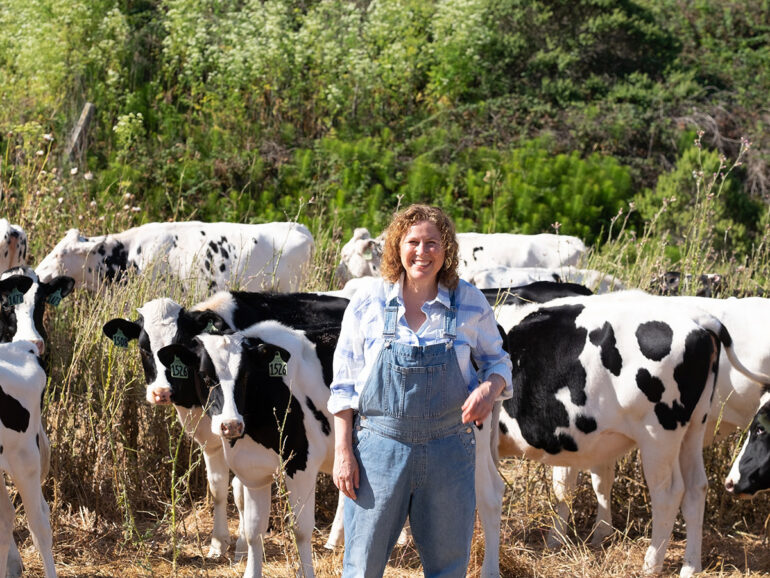
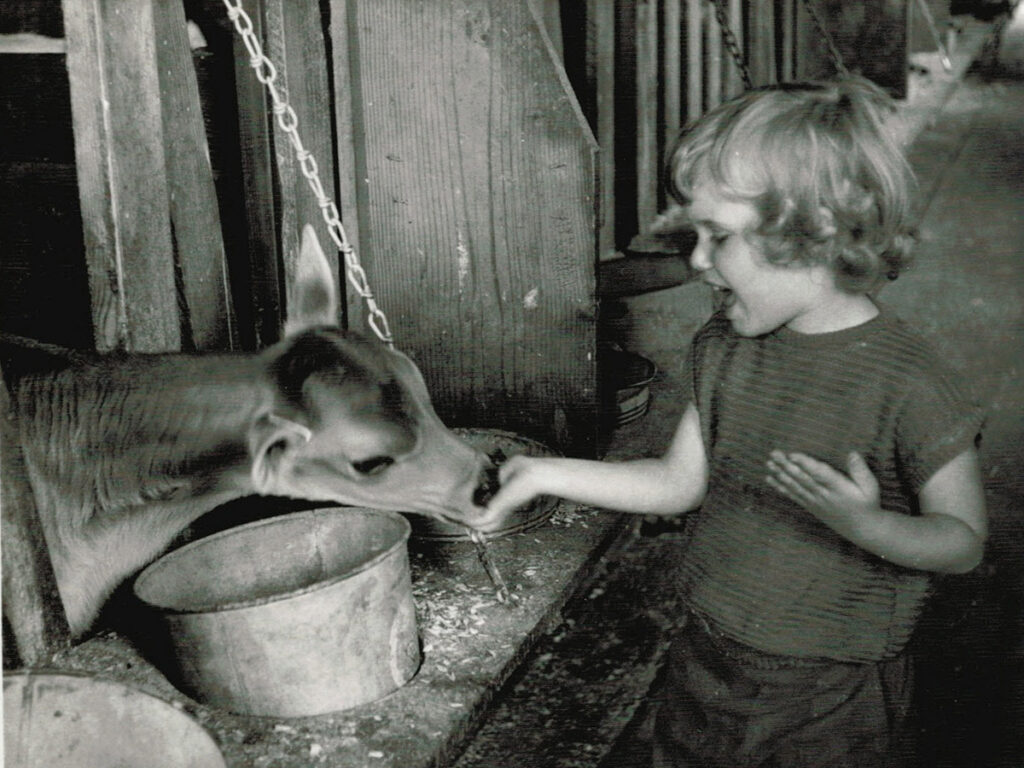
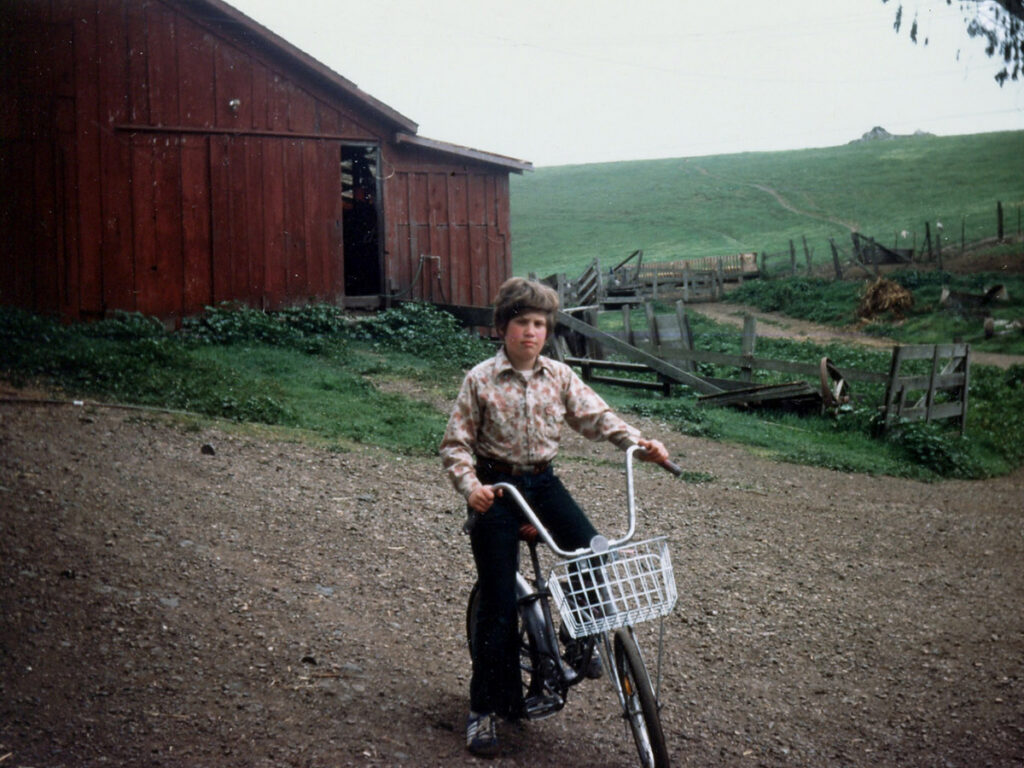
I grew up on Straus Home Ranch, out on Tomales Bay in western Marin county where there were more cows than people. Most of my childhood was spent alone, talking to myself and to my 4-H cow, Princess, all the while daydreaming about a bigger, more exciting life. So, immediately after high school, I moved to Portland for college to study acting. Soon thereafter, I fulfilled my childhood dream of living in New York City and Los Angeles — a farmgirl moving to the Big City. As much as I loved it, it took decades of living in the urban metropolis to realize that our family farm was the essence of me, and eventually led me to create the Cheese Trail.
Returning Home
Following the unexpected deaths of both of my parents (my mother in 2002 and then my father in 2003) I was faced with managing our family ranch and the impossible task of filling my mother’s shoes. Ellen Straus, co-founder of Marin Agricultural Land Trust, had been a local hero and fierce champion of farmland protection. She was a cheerleader for all farming entrepreneurs and innovators, organic or conventional. Yet despite my anxiety around living up to my mother’s accomplishments and memory, losing the family farm would have destroyed me — so I came home.
Once I returned, I threw myself into caring for the land I love. It didn’t take me long, however, to see just how fragile our agricultural community had become. Milk prices were painfully low, while expenses for farmers remained high, and many couldn’t make the math work. Dairy farms were disappearing — squeezed by costs, drought, generational shifts and the sheer difficulty of the work. Some transitioned to beef. Others closed altogether. (In fact, roughly 90% of all California dairies have disappeared since my father started milking cows in 1941).
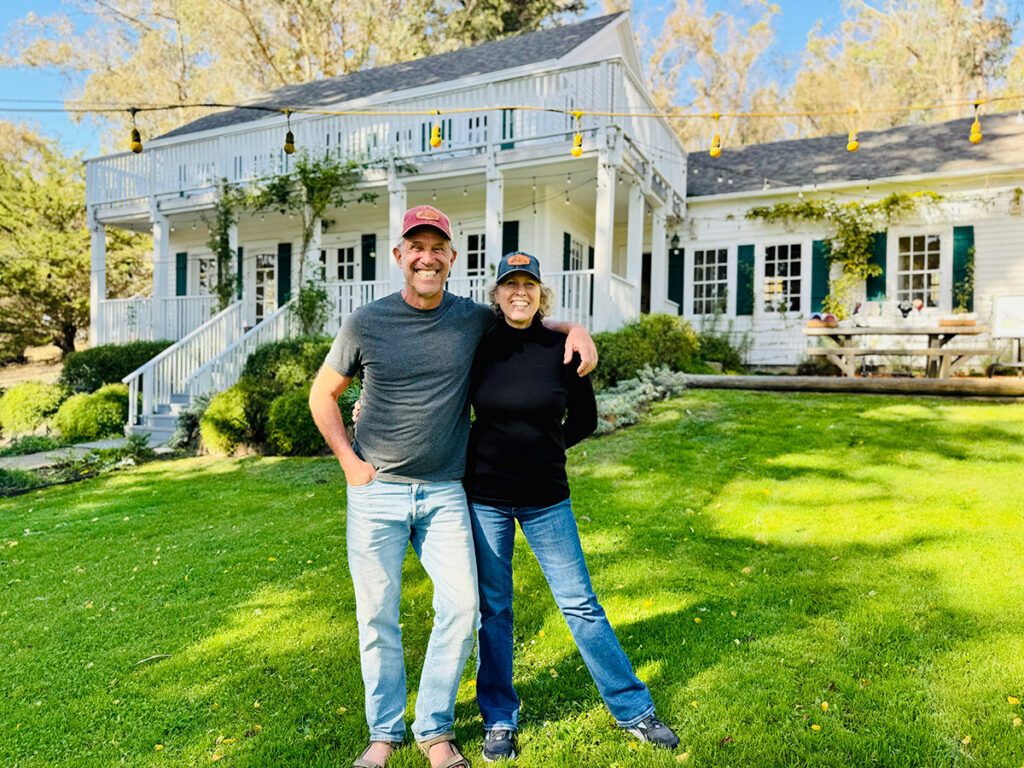
While managing the ranch, I also began giving tours at Cowgirl Creamery — a change of pace from the previous 11 years I had spent as VP of Sales & Marketing of my brother Albert’s company, Straus Family Creamery (SFC). But when I was eventually asked to sit on the board of the Marin Economic Forum as the agricultural representative, despite all of my experience, I felt like a fraud. I was (and still am) a farm girl, but I had never been a farmer. I also still felt the quiet expectation inside myself that I had to be a new version of my mother.
Overwhelmed, I called co-founder of Cowgirl Creamery (and friend) Sue Conley and told her, “I need a project that will help dairies.” Her immediate response? “We need a cheese trail map.” It sounded almost too simple, but I thought, “Why not?”
Building the Trail
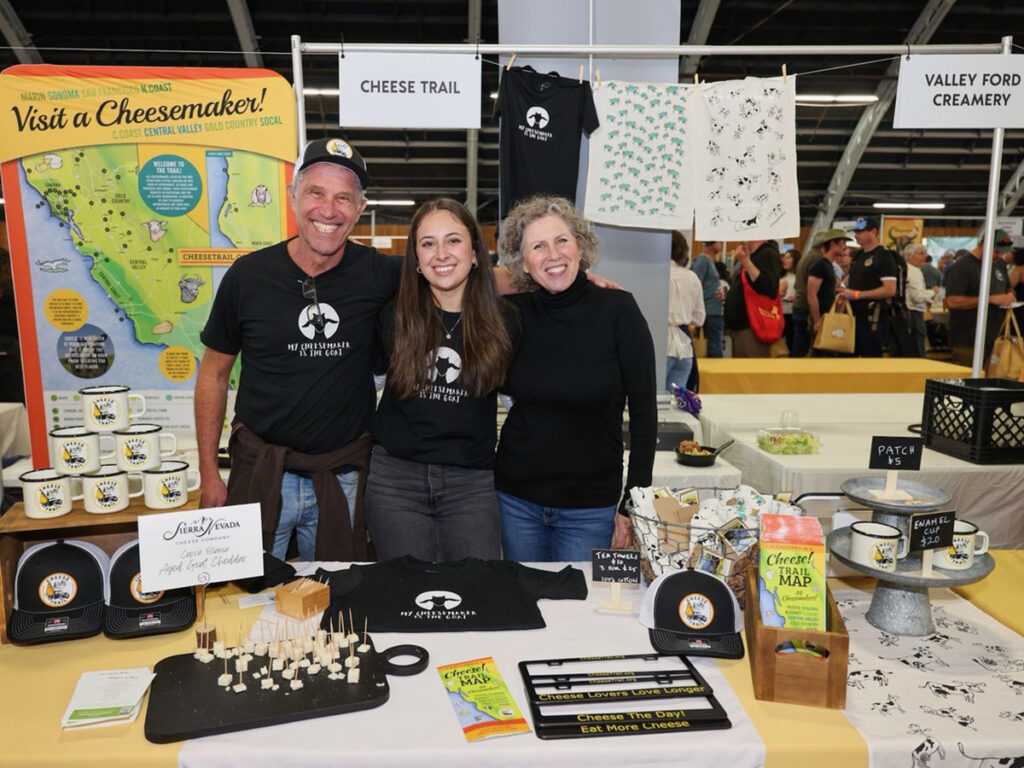
To create the trail map, I used what I knew about both the region and the dairy industry to build out this incredible resource: I drew onmy the understanding of what it takes to run a dairy; my time spent helping Albert, and the knowledge he shared in those early days of the SFC; everything I learned from the brilliant cheesemakers Maureen Cunnie and Eric Patterson at Cowgirl Creamery; and the passion for keeping our farms alive which I’d gotten from my parents. Four months (and a lot of work) later, the first Cheese Trail map was released, covering Marin and Sonoma counties, two regions deeply intertwined when it comes to agriculture, resources and community. While the first iteration of the map included all cheesemakers, later versions would only include those that were open to the public. Here, cheese lovers could find creameries that offered everything from retail shops and cheese making classes to tours and more.
Two months into the project, I ran into the Marin French Cheese Company’s sales manager. He told me their retail sales had grown by 25% from people finding them on the map. That was the moment I knew the project had legs. In 2017, I expanded the map to all of California. We also launched a website that included all cheesemakers — open to the public or not — along with each brand’s cheeses and any upcoming events. Our readership now is both cheese lovers and those in the industry. More recently, the 2026 printed map features 42 open cheesemakers in California, though that number is constantly in flux.
The Future of Dairy
Over the years, I’ve started to use cheese as an excuse — an excuse to travel the backroads, meet dynamic and passionate people and to stay curious. I’ve found that local cheesemakers are wildly creative, deeply committed and endlessly interesting. Ironically, tasting cheese is the least of my interests. What I love are the people and their stories. Through a kind of quiet alchemy, milk becomes cheese — endlessly varied, deeply expressive, shaped by place and patience. Once you taste these artisanal creations, it’s hard to go back to the grocery store’s anonymous blocks of cheddar and jack.
I still serve on the board of Marin Agricultural Land Trust, continuing my mother’s legacy in my own way, working from every angle to protect the land and the people who steward it. (And I’m still writing and acting!) Meanwhile, I’m working closely with my brother Michael, who joined during the pandemic, to make the Cheese Trail a national resource for cheesemakers and the artisan cheese community. We are also planning to launch a digital Route 66 Cheese & Food Map, hopefully out in the first half of this year.
It’s true that our small dairies can’t compete with the larger ones, and whether the Cheese Trail has stemmed the tide of disappearing dairies is still to be seen. To keep these small, family owned businesses alive, however, the industry needs to think outside the box and create a value-added product. Dairies need to open their farms to the general public if they can, to show the importance of farming.
Making cheese does help the dairies — the same thing can be said of our buying and eating it. For every cheesemaker who survives, we’ve saved a farm. And if you’d like to be part of this small, hopeful experiment, I have just one recommendation: Eat more local cheese. Trust me. It leads to very good places. To create your own cheese adventure, visit CheeseTrail.org.
Cheese Trail Fun Facts
Marin French’s Breakfast Cheese once helped sustain Gold Rush miners, its history tangled up with tales of murder, mayhem and eggs.
Cowgirl Creamery accidentally created Red Hawk, which went on to become one of the most celebrated cheeses in America.
The Lafranchi brothers at Nicasio Valley Cheese made California’s first farmstead organic cow’s milk cheese.
Point Reyes Farmstead Cheese Company, produced the first Blue Cheese in California. You can stop at their marketplace on the farm, passing by a methane digester that processes the waste to power their dairy.
Tomales Farmstead Creamery, also known as Toluma Farms, is the place to head, especially in early spring, to play with the kids (i.e. baby goats). You get to hold them and watch them hop, jump & skip. It will bring joy to your heart.
Andante Cheese, while not open to the public, is renowned for its delicately made goat cheeses, found on chef’s menus all around the Bay Area. Each tiny wheel has a musical name.