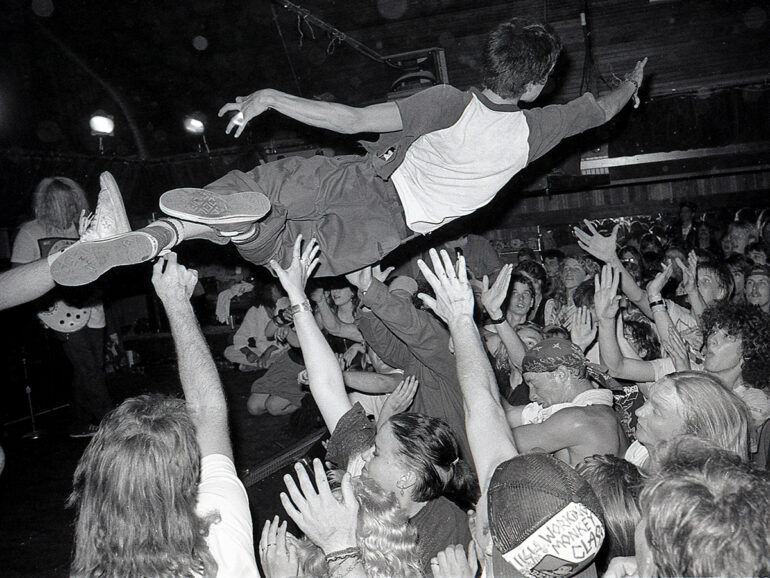
In 1989, a 13-year-old Gabe Meline snuck out for a punk rock show at the River Theater in Guerneville. MDC headlined, and openers included a teenage band from Rodeo called Green Day. Meline later arranged for them to perform at his high school, and hung backstage with them at Petaluma’s Phoenix Theater, just after they signed a huge record deal. Within months, the East Bay trio became the biggest band on the planet.
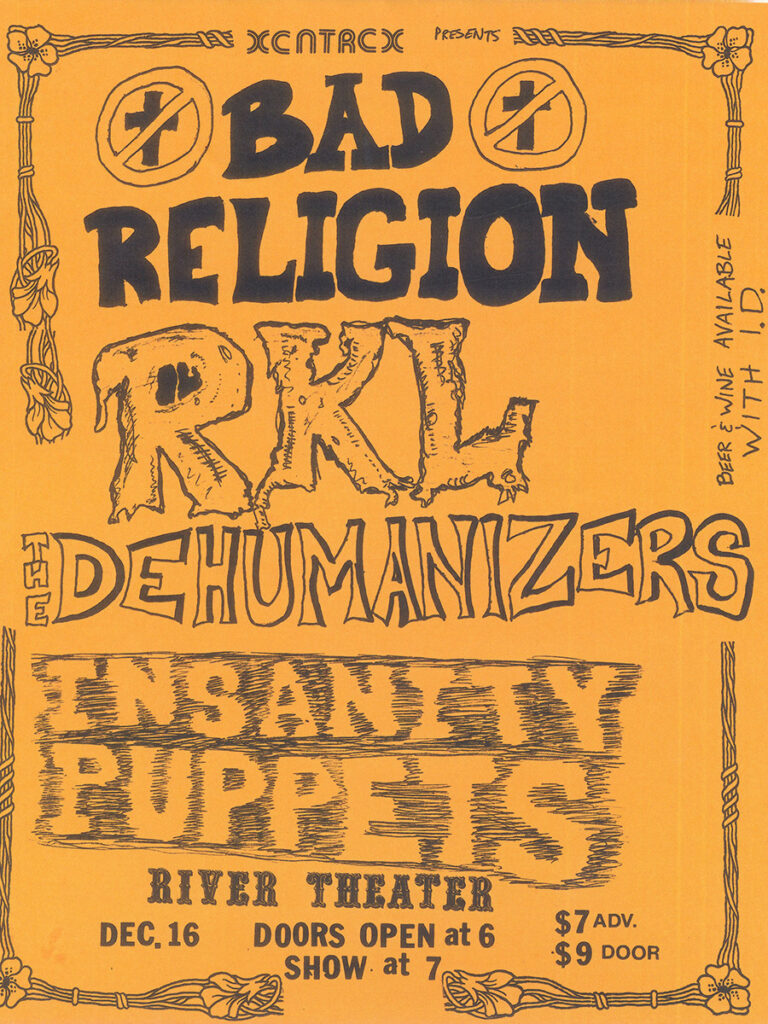
Such astonishing tales are routine for Meline, an integral part of the North Bay indie rock scene for decades. From being editor at KQED and the Bohemian to playing and touring in many bands himself, he’s collected countless flyers, zines and demos over the years. That archive forms the foundation of Disturbing the Peace: Sonoma County’s Early Punk Underground, a multimedia exhibit running through August 23 in Santa Rosa.
Sonoma concerts included matinees in barns, backyards and even downtown Santa Rosa storm tunnels (until the cops arrived), while Marin shows remind us that it’s not only Grateful Dead land. A legendary 1985 Dead Kennedys show at the Novato Theater saw seat cushions become frisbees, while singer Jello Biafra decried adulthood as “a life sentence.”
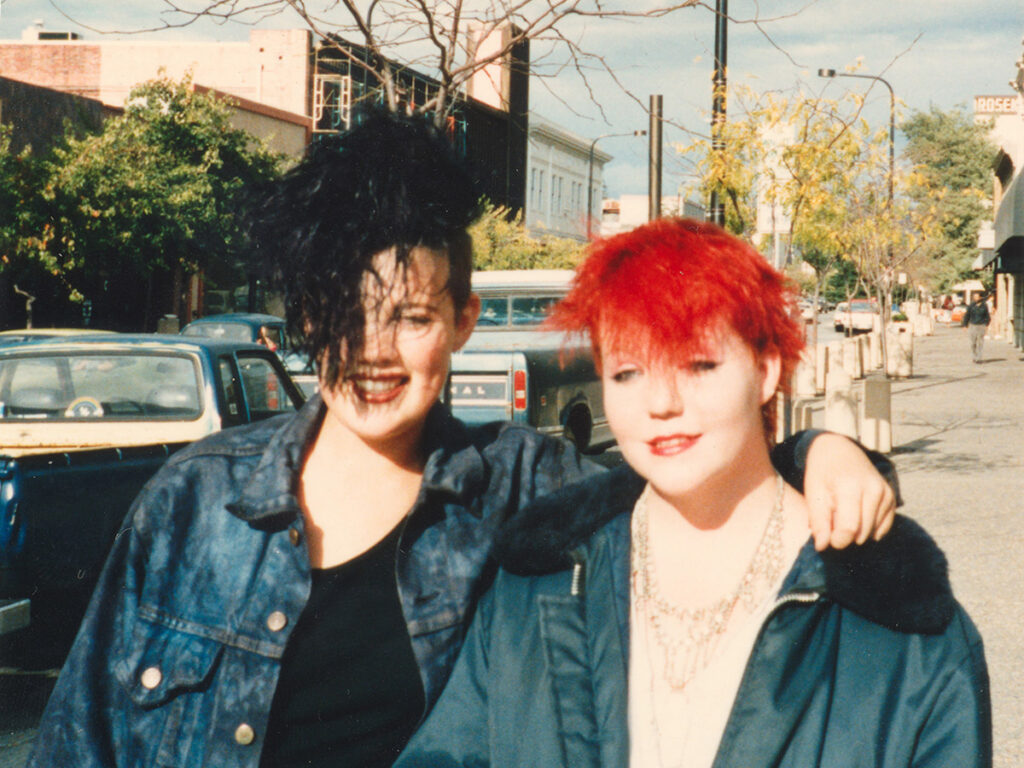
Featuring rare video, audio and wall art, the experiential exhibit’s centerpiece is a stage, ready for anyone. A recent impromptu set saw Meline playing Nuisance covers with Alex Botkin and Jawbreaker’s Adam Pfahler.
We sat down with Meline at the Museum of Sonoma County to discuss the scene and the exhibit it inspired.
How did the exhibit come about?
In early 2025, the museum had a slot to fill and wanted to do a show about the history of Sonoma’s punk scene. They said “we’ve talked to a couple people and they all said, ‘you need to call Gabe Meline.’”


Were you surprised by the idea?
Museums usually showcase very old history, and it’s only been 40 years or so. But I trusted the museum because they had done a show a couple years ago on the local lowrider scene. The community had been misunderstood and cops were always cracking down on them. There were anti-cruising laws, which were selectively enforced and racist. And that law had just gotten overturned, so it was a perfect time.
What was your first punk record?
I bought this 7-inch and it was a terrible drawing of, like, a peanut man on a carousel and it was a punk compilation called We’ve Got Your Shorts. It didn’t make any sense to me at all, but on it was a band from Santa Rosa, Insanity Puppets. I thought, ‘that’s a cool name for a band,’ so I bought it. It was $3.
I got my hands on their demo at Comstock Junior High and that was a really formative tape. It was other punk flyers on polls and be like, ‘this is something that someone can be a part of.’ I collected flyers for three years before I ever went to a show, because my parents didn’t want me going to punk shows.
Did they come around?
It took me a while to work up the guts to show them Minor Threat lyrics and say, ‘this is a positive thing; they’re spreading positive messages.’ They eventually understood and they really supported me playing music myself. They liked that I was learning how to play bass by playing along to Victims Family and Subhumans.

The first punk show I really went to was in Guerneville in 1989. It was MDC, All, Nuisance, and opening was a band called Green Day. It was their first show in Sonoma County. And all the hardcore punks hated them because they were too happy-sounding. But I really liked them a lot.
I just felt like, ‘wow, this is hella cool, and I want to do this.’ Most of the early shows I went to were menacing in a way that I miss. Scary [mosh] pits. Lots of skinheads. People on meth. Drunk people starting fights. You weren’t sure what you were walking into.
How early did the scene begin?
In the ’70s, there were bona fide punk bands here. I don’t think Sonoma County really cohered its own distinct sound until the ’80s. Victims Family was known as a jazz core, and the group Coffee and Donuts, from Petaluma in the ’80s, would do blues jams and country songs. Of course, in the late ’80s and early ’90s, there was a lot of “white boy funk” with slapping bass and rapping. It’s this strange cross-pollination of different types of music infused into hardcore punk. Because we were a smaller scene and kind of remote and removed from San Francisco, you’d start a band and someone would have a strong country background or something.

Sounds like freedom.
Yeah, I’m glad that we didn’t have a rule book to follow. I think that benefited us. A lot of the punk scene in Sonoma County was just figuring it out as it went along. Not just what type of music to play, but also where to play it and how to get it out to people. That resulted in a lot of shows in fields and barns and backyards.
Good thing you saved all those posters and such.
I don’t think I’m a pack rat, but I did save a lot of stuff because it felt important. Stubs, posters, stuff like that. Certainly a lot of the flyers [in the exhibit] are mine. A lot of the tapes and records are mine. A lot of the zines.
Any hating from scenesters?
When you set out to make a formal overview of a scene, there can be a lot of egos involved and a lot of gatekeeping. But everyone was so open. People had suggestions, and they were mostly good ones. I had no idea the first punk record from Santa Rosa was from the group Soldiers of Fortune who opened for the Dead Kennedys in 1982 in Cotati. Anyone in a subculture always wishes they had gotten there five years prior. There’s a lot of FOMO. “You should have been there when Black Flag played Guerneville.”
The exhibit has earned rave reviews.
Like with the lowrider exhibit, a museum can lend credibility or dignity to a maligned subculture. And I hope that that’s the case with this. A lot of the people in this scene were told what they were doing was immature or stupid or pointless. But all these people are somebody. Some are my personal idols to this day. They happen to live in town and made a demo tape 30 years ago that had a big impact on me.
Will the exhibit extend beyond August or travel?
Once you leave this area, it loses why it’s so special and surprising. And kind like a play, you’re never going to see that exact cast and performance ever again. I like the idea of an ephemeral exhibit. Once the curtain comes down, it’s gone.
“Disturbing the Peace: Sonoma County‘s Early Punk Underground” runs through August 23 at the Museum of Sonoma County.