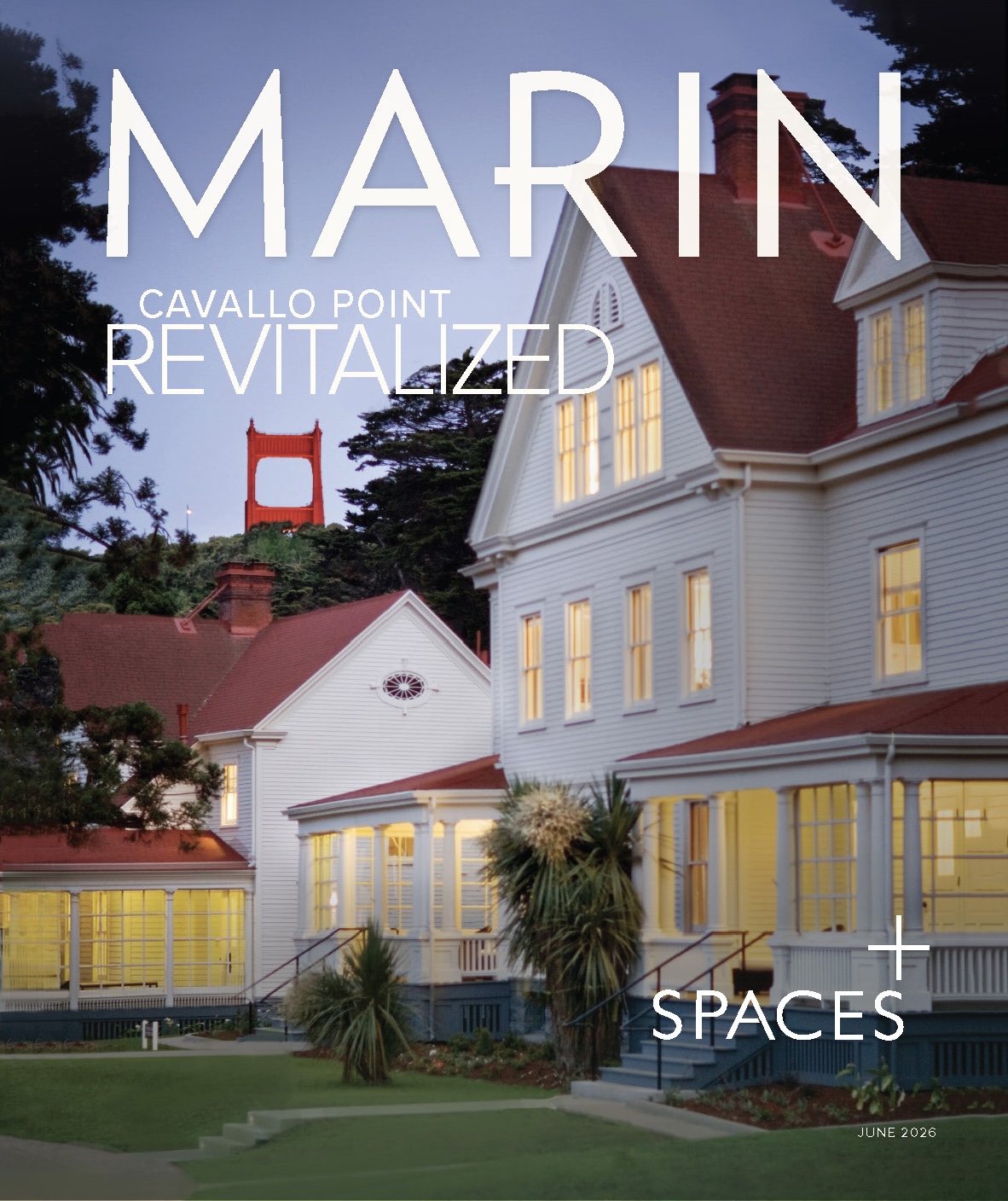
By definition, hotels typically cater to travelers with limited time in the area, especially those in bucket-list locations like Sausalito. A few, though, become beloved by locals, offering opportunities to celebrate life’s milestones in style, reconnect with friends over dinner or just drop in for a post-work drink — think a combination of the Ahwahnee in Yosemite, Hotel del Coronado in San Diego and the bar from Cheers.

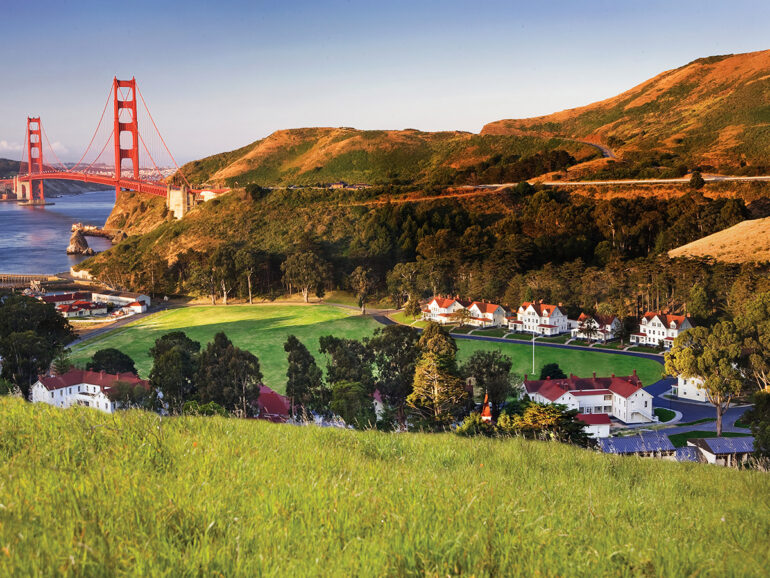
Cavallo Point, a Michelin two-key property, however, does it all while tucked away in the Golden Gate National Recreation Area’s Fort Baker. And nearly 20 years after the debut of its sustainably repurposed military facilities, this luxurious lodge is welcoming neighbors with renewed vigor as DiamondRock Hospitality, which purchased the property in 2018, partners with the original developers to bring back a restored sensibility and sense of place.

The desire to include those who have been part of the property’s identity from its inception comes in part from the man who helped build it. “Without the community, Cavallo Point would not be as successful as it is,” says Mike Freed, co-founder and managing partner of Passport Resorts. In 2008 Freed and his team famously blocked a mega-Marriott plan to take over the space and instead, with a keen respect for the environment and preserving the original buildings, created Cavallo Point.
The Tale of a Dog Walk
Ten years before opening its doors to the public Freed was living on Sausalito’s South Street when he took his Rhodesian Ridgeback on a walk in Fort Baker. He ran into a fellow dog walker, Jane Woodman, who told him Sausalito residents were concerned about the National Park Service’s proposed 350-room conference center on the former military post. “I said, ‘Count me in — I have this sustainably-focused hotel company,’” Freed recalls.
At the time, Passport Resorts’ portfolio included the Post Ranch Inn in Big Sur , which Freed and partner Peter Heinemann built, the Skylonda Lodge in Woodside and the Jean-Jean-Michel Cousteau Resort in Fiji, which he had transformed from backpacker accommodations into an ecoluxury destination. After learning this, Woodman responded, “We’ve been looking for you. You have to put in a request for qualification to make this conference center smaller,” according to Freed.
He and Heinemann did, taking on Tom Sargent and John Clawson of ecofriendly Equity Community Builders in San Francisco as a partner. “Our attitude was, ‘Let’s come up with a plan that is economically viable but respects the national park and creates something not just for our guests but for the community,’” Freed recounts. Their resulting plans for just 142 guest rooms — split between rehabilitated officers’ quarters and new buildings on the footprints of non-historic structures — ultimately gained the support of the Golden Gate Park National Park Conservancy, the park’s revered General Superintendent Brian O’Neill and the local writers of “194 out of 200 letters” weighing in on the project, he notes.

The Story Behind the Farley Bar
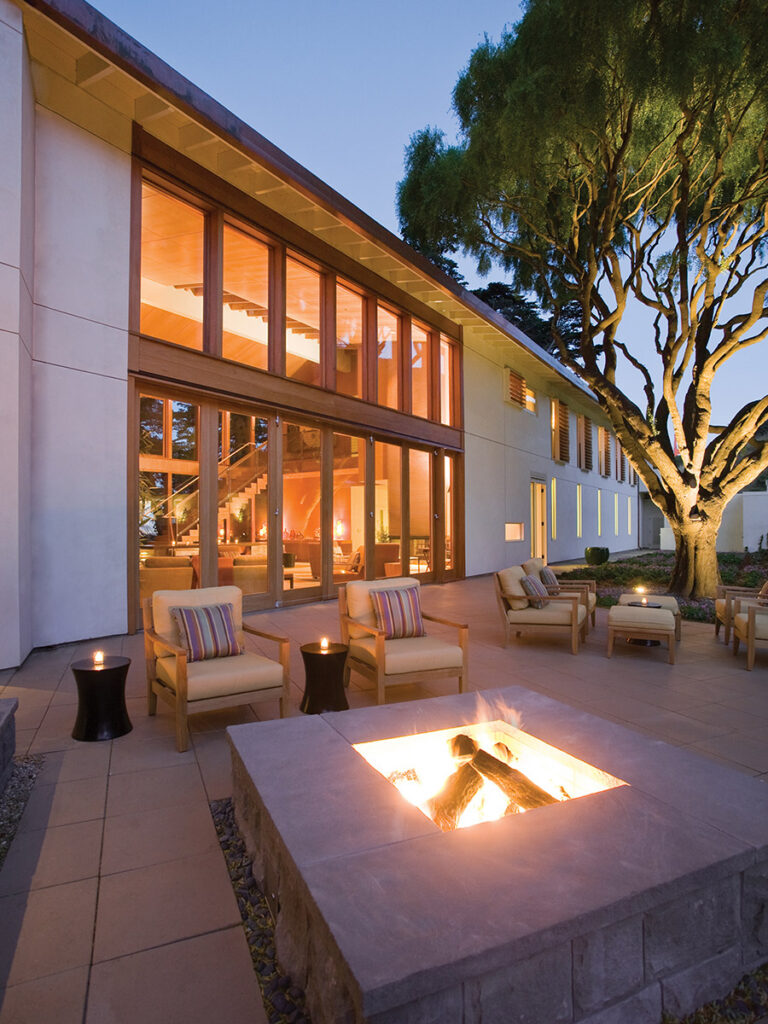
First stop: Farley Bar and Murray Circle (currently Sula) — Chef Joe Humphrey, who opened Cavallo Point and earned a Michelin star, is consulting with executive chef Michael Garcia to bring back favorite dishes. Mike Niemann will give interiors a refresh to ensure discreet, yet meaningful renovations to both. “Our goal is to bring back the sense of place of Murray Circle,” says Stephen Andrews, V.P. of Marketing.
The reimagined space at Farley Bar and the soon-to-debut Murray Circle are currently underway and will be ready for locals to enjoy in phases through later summer and the balance of the year, including musical entertainment at Farley Bar and a range of exciting new local specials.
When renovating Murray Circle and Farley Bar, the property looked to the original memorabilia gifted to Freed by San Francisco Chronicle cartoonist Phil Frank.
A Sausalito houseboat resident in the ’70s and ’80s who later moved ashore, Frank used to comb Fort Baker with a metal detector, turning up “insignia, old spoons from the mess hall, pieces of clothing and whatnot,” according to Freed. These items, along with vintage photos of the fort and the local baseball teams that had played there in the early 1990s (which Frank’s wife Susan had framed), are now featured in the two new spaces. “We put them over the bar and put his cartoons up, and it was such an attraction,” Freed says.
“The bar honors Phil Frank, who passed away the year before we opened. Someone later made the decision to replace these artifacts with art, but it was like we lost the soul of the property when that happened. We’re going to bring this type of history back — it’s an important part of what we do and important to the National Park Service.” Andrews adds that restoring the memorabilia and original Farley artwork is one way “to re-embrace the community.”
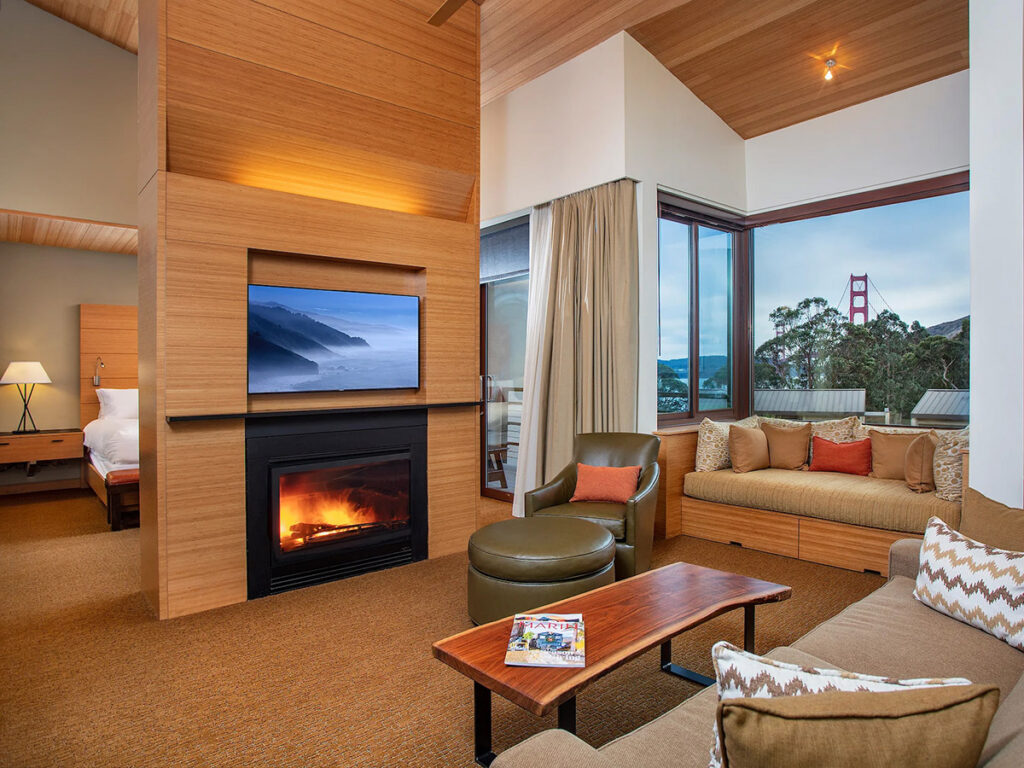
Come later summer, when visiting the Farley Bar, couples, families and groups can hang out in a new lounge around the historic fireplace, settle into club chairs with a Golden Gate Bridge view or choose from a range of high-top and bar seating “that maintains the Farley Bar’s energy and lively edge,” says Niemann. Over at Murray Circle, guests will find a dining room that features an “elevated” experience, through “added privacy, material warmth and a more intimate, comfortable space.
More changes, such as the relaunched cooking school, a wealth of wellness programs and a growing calendar of public events, provide even more reasons for locals to visit, no luggage required.
More than a Comic Strip
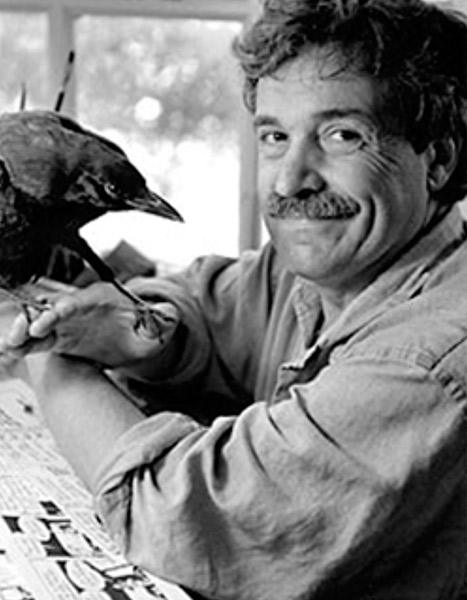
Phil Frank’s Farley was a beloved Bay Area comic strip that turned local life into gentle, sharp-eyed satire. It began in 1975 as Travels with Farley, a nationally syndicated strip, before Frank reshaped it in 1985 into a locally focused comic for the San Francisco Chronicle. That change gave the strip its special flavor: instead of working weeks ahead, Frank could respond quickly to San Francisco and Marin County news, politics, personalities, and absurdities.
The title character, Farley, was a reporter and sometime park ranger whose observations reflected Frank’s own curiosity, humor, and affection for Northern California. The strip often featured Bay Area landmarks, civic debates, environmental themes, and quirky local characters, making it feel less like a generic newspaper comic and more like a running conversation with the community. The Bolinas Museum noted that Farley became one of the country’s rare locally focused daily comic strips.
Frank lived in Sausalito and drew deeply from Marin’s landscape, history, and personalities. His work helped preserve a particular Bay Area voice: witty, outdoorsy, politically aware, and slightly eccentric. Frank passed away in 2007 one year before Cavallo Point opened.
History for the Taking
Passports Resorts has also welcomed back architect Stanford Hughes, president of Sausalito Historical Society and the original designer of Cavallo Point, to serve as a consultant on the renovations, and Andrews encourages community members who want to dive even deeper into the history of Cavallo Point — a name the Spanish gave to a nearby rocky point in 1775 — to take a free weekend tour with longtime lodge employee Brit Thurston. A former interpretive ranger with the national park, Thurston is a former board member of Sausalito Historical Society, Andrews notes. “We want people to understand the history,” he adds.
“We want to remind people this is a great place to bring an out-of-town guest and to see one of the great historic monuments in the Bay Area, which started in the late 1800s and operated through World War II,” Freed says. Named for a U.S. senator who lost his life leading Union troops in the Civil War, Fort Baker later became an Army Reserve training facility, with the last soldiers departing in 2000.
It’s also home to the oldest bowling alley west of Mississippi, a one-lane operation where bowlers used to have to set up the pins by hand, according to Freed. Now it’s used by local groups as a unique place for parties, which he hopes to see more of in the coming months, along with “more book signings, more speakers, more conversations, more music events,” Freed says. “We’ll focus a little more on the history and bring the community to celebrate with us.”
Ten Fun History Facts about Cavallo Point
When the Golden Gate National Recreation Area was established in 1972, Fort Baker was designated for transfer to the National Park Service once the military no longer needed it. The last soldiers left in 2000, and the transfer from post to park became official in 2002 and the “post-to-park” transformation was completed in 2008. At this point, the Golden Gate National Parks Conservancy identified Cavallo Point as the first national park lodge of the 21st century.
- What’s in a name?
In 1775, Captain Juan Manuel de Ayala sailed his ship, San Carlos, into what is now Sausalito. Noticing the abundance of wild horses, he named a rocky point near today’s Fort Baker “Punta de Caballo” (translated as ‘Horse Point’) Over time, English-speaking settlers adopted the spelling and pronunciation “Cavallo,” and the name stuck. - Coast Miwok lived here.
Long before soldiers, officers, and hotel guests arrived, the Coast Miwok and their ancestors lived in the region for thousands of years. The National Park Service notes that Coast Miwok communities relied on seasonal hunting, fishing, gathering, kelp and shellfish, and that their descendants continue cultural restoration efforts today. - 1866 The U.S. Army enters the scene.
The location was militarily valuable because it guarded the north side of the Golden Gate, the narrow entrance to San Francisco Bay. The U.S. Army acquired the site in 1866, decades before the Golden Gate Bridge existed, as part of a broader effort to fortify the bay. - Many historic buildings that give Cavallo Point its character were built between 1901 and 1915 around Fort Baker’s 10-acre parade ground. It has also served as a horse arena and golf course.
- Endicott Design to Attract Soldiers.
Fort Baker was built during the Endicott Period, when the Army modernized coastal defenses while also improving soldiers’ living conditions. Its Colonial Revival-style buildings gave the post a familiar, orderly, and distinctly American character. Buildings included modern comforts for the time, such as ventilation, indoor plumbing, a hospital, gymnasium, post exchange, lunchroom, and even a bowling alley. - Original Tin Ceilings
Tin ceilings were used at Fort Baker, now Cavallo Point, for both practicality and durability. When practice guns were fired, the vibrations could loosen plaster and cause it to fall from the ceilings. The pressed tin helped hold the ceilings together while also adding decorative character to the Army buildings. - Jail time
During Cavallo Point’s free weekend history talk, guests may get a peek at the old jail. It was mostly used for rowdy soldiers returning from the bars in Sausalito. How many hotels can say they have a literal holding tank? - Mess Hall To Ballroom
The ballroom at Cavallo Point is part of the original Fort Baker post, where Army buildings supported daily military life, from gatherings and meals to recreation and official functions. - Pins up!
Long before Cavallo Point became a lodge, Fort Baker had its own bowling alley — reportedly the oldest bowling alley west of the Mississippi. It is an old-fashioned, manual-style alley, the kind built before today’s automatic scoring and flashy entertainment centers. It was part of the Army’s effort to support soldiers’ health and morale. It’s open today for private parties. - Model for sustainability and preservation
Cavallo Point’s rebirth was not just about restoring old buildings. The project preserved historic structures, restored habitat, improved trails, supported the Institute at the Golden Gate, and created a LEED-certified lodge. Fort Baker’s revitalization is now seen as a successful example of how historic preservation, environmental stewardship and public access can work together.