Worldwide, human culture often goes hand in hand with alcohol production. An article a few years back in Smithsonian Magazine posited that “true” civilization began with the production of beer, arguing that simple farmers can produce more than enough food for themselves on a single acre of land, but in order to produce beer, a concentrated form of fermented grain, you needed a much larger operation. And that operation needs protection and organization, eventually culminating in large human settlements, and inevitably, government. For better, or for worse.
Marin County’s human history goes back thousands of years. The so-called “grandfather midden,” a burial site in Larkspur that was paved over in 2014, dated back 4,500 years — about the same age as the Great Pyramids of Egypt. But in a strange aberration, native tribes in California don’t really have a pre-contact history of alcohol consumption. “The native Coast Miwok who lived here for millennia, did not produce, or ferment or use alcohol at all,” says Rip Hunter, a Board Member of the Sausalito Historical Society. “That had to do with the fact that they didn’t have much of anything that would ferment. As a result, they have no real tradition of intoxicants outside of tobacco.”
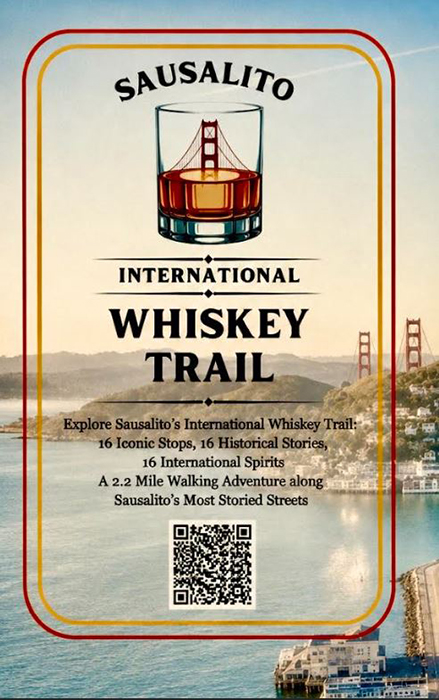
Hunter, in conjunction with the Sausalito Historical Society and the Sausalito Liquor Co. along with well-known bartender/columnist Jeff Burkhart, has launched a series of very well-attended talks on Marin’s spirits history (two at the Sausalito Cruising Club earlier this year and one at the Sausalito Women’s Club in September). After which Hunter (and his son Austin, who did the coding and app design) launched the Sausalito Whiskey Trail, an app that guides visitors to various restaurant stops curated with stories, history, branded cocktails (and mocktails) along with a featured international whiskey.
“The Whiskey Trail is a nod towards both the history of what evolved here in the 250 years since the first Spanish contact,” says Hunter. “Then many other emigrant cultures arrived, bringing various international spirits with them, thereby making this city what it is today. The Whiskey Trail illuminates that, it honors the history, and then it makes history a little tastable.”
Enter the Spanish
The Spanish first arrived in Marin County on August 5, 1775, at what is now called Old Town Sausalito. “They anchored here to gather wood for repairs, secure food and get fresh water from the streams,” says Hunter. “Ironically, the Spanish had stopped in Sausalito because there was water — very fresh water — which as it turns out was ideal for making spirits.”
And there they first met the indigenous Coast Miwok.
“The Miwok were a very peaceful, generous people,” continues Hunter. “I don’t know if there was any alcohol that was exchanged on that trip, but generally speaking it was a positive first encounter.” Subsequent exchanges would be less positive as the Spanish soon settled the entire area. They started with the Presidio and Mission Dolores in San Francisco in 1776, and then later in 1817, founded the Mission San Rafael Archangel. According to Hunter, these are places where they began to use wine for religious purposes and some social events.
The Spanish were Catholic Christians, and Catholic Christians celebrate Mass. Part of that celebration is the Holy Eucharist, which requires wine. No wine, no communion. No communion, no salvation. No salvation, no heaven. “The Spanish had plenty of their own wine that they imported either from Mexico, Spain or from one of their other South American colonies,” says Hunter. “They didn’t really make wine here in Northern California, or at least not successfully, for a long, long time. I think the soldiers were given a portion of it, as well as the officers who ran the Presidio. So, there was plenty of alcohol in that early time period.”
Eventually the Spanish did start planting grapes here — Mission grapes — and began making their own wine. In fact, the Pacheco Family of Novato (descendants of Ignacio Pacheco, a first-generation Californio) still grows grapes on the family property off of Highway 101 in Novato. It’s cabernet sauvignon these days, but there are still two archaic Mission grape vines on their property.
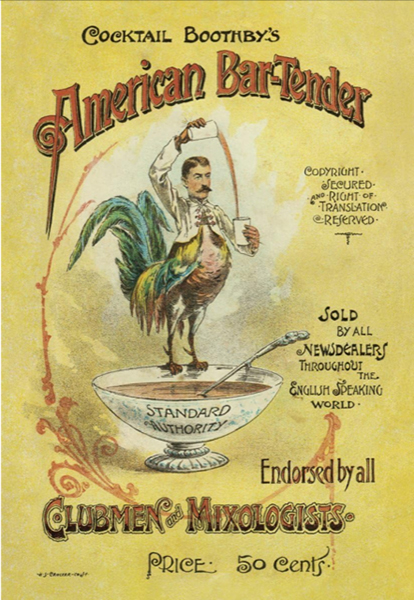
A few of Cocktail Boothby’s “10 Commandments” excerpted from his book American Bartender
- Always appear pleasant and obliging under all circumstances.
- Avoid conversation of a religious or political nature.
- Sell all the liquor you can, but use as little as possible yourself.
- Discretion in speech is more than eloquence.
- Keep your fingernails clean, your face shaved, your hair neatly arranged, and your linen immaculate.
- Punctuality is a jewel. So, get to business on time and when you are off watch, skidoo.
An International Smorgasbord
After the arrival of the Spanish, other international cultures soon followed: Mexican, Russian, British, Portuguese, German, French, Chinese and of course, the Americans. “Each of those foreign groups had their own types of spirits that they brought to the area and those got shared around pretty thoroughly,” says Hunter.
The Gold Rush, beginning in 1849 brought the Americans to the area in force. If arriving by sea they brought the rum endemic to the shipping industry, and if by land they carried with them the old rye whiskeys of the North and the newer bourbons of the South. And eventually, finding good sources of fresh water, they began making spirits here instead of importing them. “When I started working on the Sausalito Liquor Company in 2021,” says founder Scott Jampol, “I learned about Mason’s Distillery in Sausalito making whiskey which dated back to 1892. And then the American Distilling Company continued that tradition until 1963. At one point, it was the largest distillery west of the Mississippi and employed over 200 people.”
American Distilling burned down in 1963 (its former location is now the site of the Whiskey Springs residential development), but other distillers are also connected to Marin County. The Hotaling family, late 19th Century and early 20th Century distilling giants in San Francisco, had a mansion in Sleepy Hollow, the remains of which can still be seen. Cocktail Boothby, the most famous bartender of this so-called “Golden Era” of bartending published his famous treatise American Bartender in 1891 while working at the Rafael Hotel in San Rafael.
Prohibition Puts the Brakes on
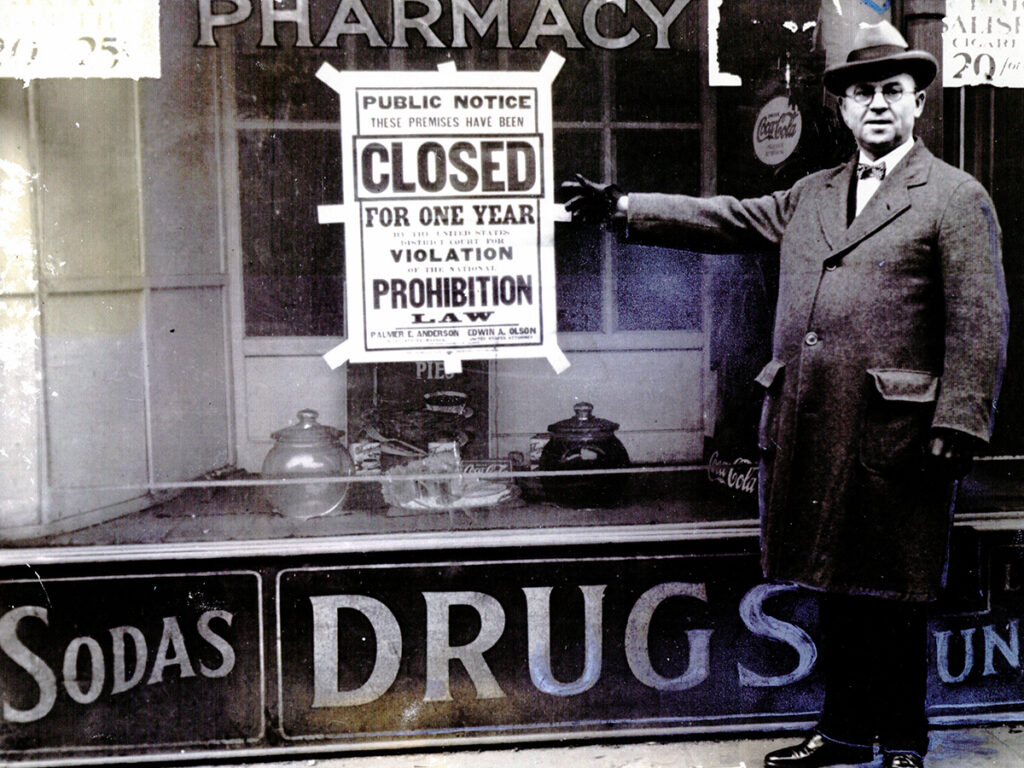
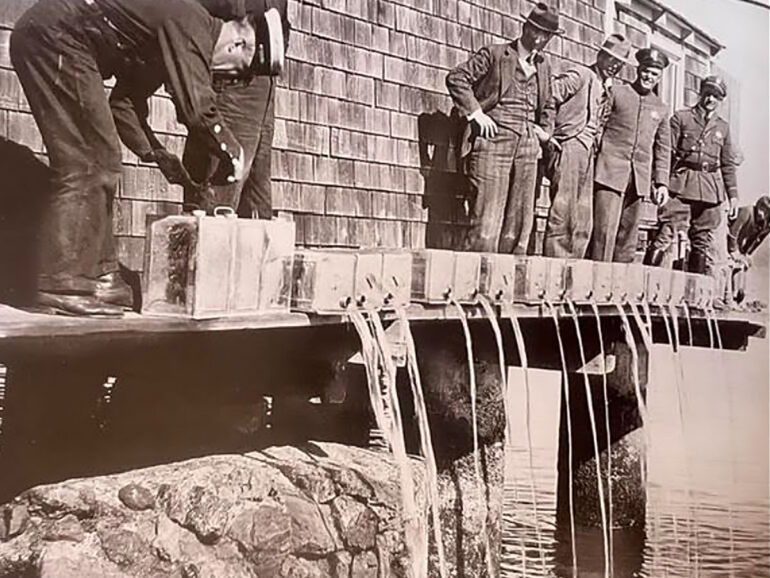
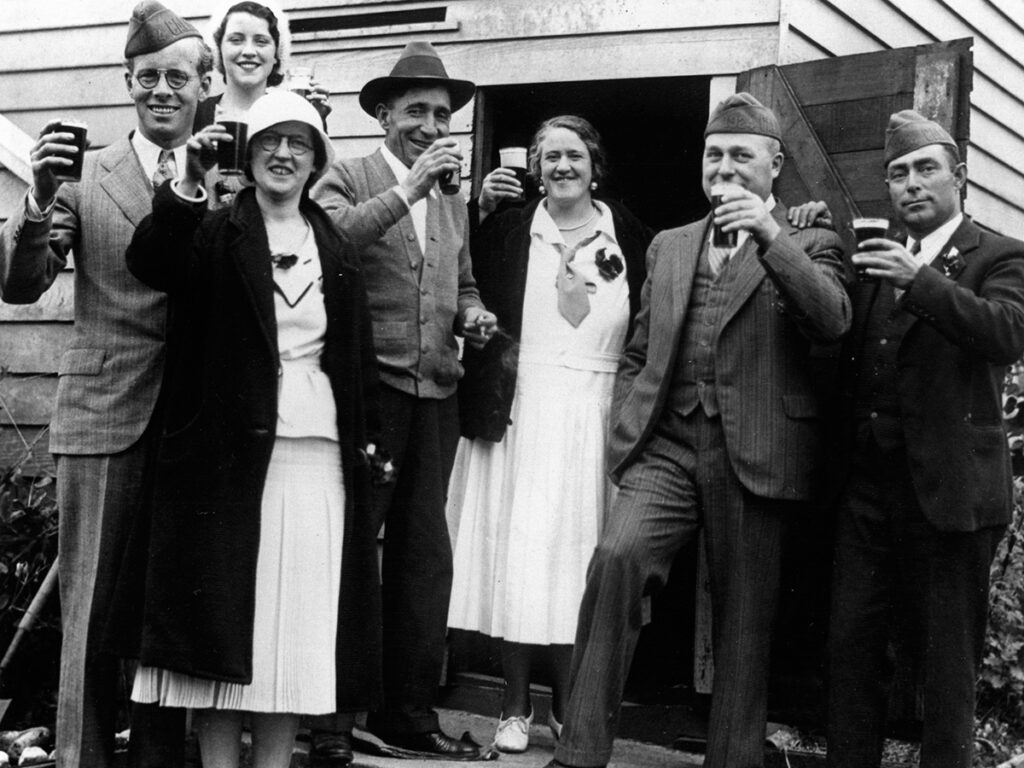
At the turn of the last century the alcohol business in Marin was booming. And then along came the Volstead Act. Prohibition came to Marin, along with the rest of the country, in 1919 with the passage of the 18th Amendment. “Apparently small-town Fairfax wasn’t a place where the Volstead Act was enforced with much enthusiasm,” says Marcie Miller, a local Marin historian with Save Marin’s History, who leads her own Prohibition Talks as well as history walks throughout West Marin. “Residents made their own moonshine, and liquor was readily available. As one Northwest Pacific Railroad conductor reportedly observed aboard the celebrated Fairfax Picnic Train, ‘You could get a drink anywhere in Fairfax except the Post Office.’”
Miller goes on to say that Fairfax was part of a larger West Marin bootlegging network. Illegal liquor arrived by sea from Canada, with federal agents watching the waters off Tomales and Bolinas for delivery ships. On foggy nights, smaller boats would bring the cargo ashore, where wagons hauled it to local ranches for safekeeping. Miller claims that ranchers were sometimes paid in liquor, and the contraband later continued east over White’s Hill to Fairfax or south over Mount Tamalpais to Sausalito. “Fairfax even had its own early warning system,” she says. “A lookout atop White’s Hill watched for the black Model A Fords of federal agents. When the ‘revenuers’ appeared, a fast rider could race down the valley to spread the word.” For a small rural town, Fairfax had developed a remarkably efficient system: moonshine, hidden liquor, hilltop lookouts and plenty of warning before the law came knocking.
Fairfax wasn’t alone. Sausalito also came to play. “Here in Sausalito, because we were so isolated, it was almost like Prohibition didn’t exist,” says Hunter. “There was the great Mason Distillery that had been here for about 30 years, which had just pivoted and started making medicinal spirits, and they kept operating. But a lot of the restaurants and liquor bars that were here just pivoted to selling ‘soft drinks.’ Little old Sausalito was really a hub for a lot of rum-running activities because of its location.”
Legendary gangster George “Baby Face” Nelson (real name Lester Joseph Gillis) even worked at the Valhalla restaurant in Sausalito during Prohibition, reportedly as a bartender. “He was one of the secret rum runners, taking small boats out,” says Hunter. “He was here for about two years before he became Public Enemy Number One … and he never touched a drop of alcohol himself,” says Hunter. “Which is just kind of ironic, being in that business. Public Enemy Number One, on the FBI’s top list, and he ends up dying in Chicago in 1934, but none of it had to do with him drinking.”
Distillation Nation
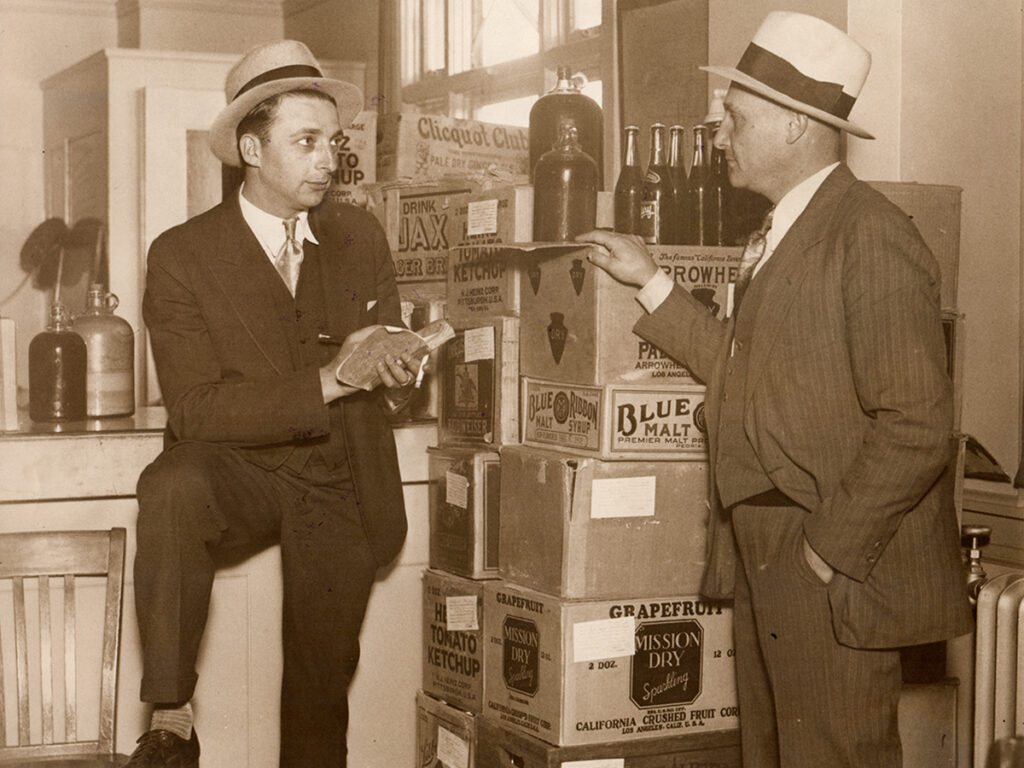
Ironically, while Mason Distillery survived Prohibition, it didn’t survive post- Prohibition, becoming American Distilling on the day Prohibition ended and operating in Sausalito right up until the fire in 1963.
After American Distilling decided not to rebuild, the Marin spirits industry pivoted mainly to bars and restaurants. Valhalla survived all of it until it closed finally in 2009. In 1966 the Trident (owned by the Kingston Trio) opened in Sausalito and became a mecca for music and culture (as well as the birthplace of the Tequila Sunrise) before closing first in 1980, only to reopen in 2012, before closing again on New Years Eve, 2025. Smiley’s Saloon in Bolinas is widely regarded as the oldest continuously operating bar in California, operating since 1851, and The William Tell House in Tomales isn’t far behind, opening in 1877. The 2 A.M. Club in Mill Valley is approaching 100 years in business, as is the Buckeye Roadhouse.
There have been other distillers along the way: the misleadingly named Woodbury Winery in San Rafael, operated by Russ Woodbury, which pioneered “craft” spirits long before that became a term, bottling a 21-year-old brandy in 1984, and producing the first vintage port in California that actually followed the official Portuguese port guidelines, before closing in 1996. Elk Fence, a distiller based in Tomales but made in Santa Rosa, opened and closed in the first quarter of the new millennia, and several local producers continue to lead the charge.
“Spirits, whether made or sold here in Marin, have always been a big part of our colorful history,” says Hunter. “I wanted to contribute to a part of that story’s future, and I truly believe that the Sausalito Whiskey Trail is shining a positive light on its rich past.”
And if there is one way to make history more interesting, adding alcohol to the equation just might be it.
Sausalito Whiskey Trail Participants
Angelino’s Restaurant
621 Bridgeway
Spirit: Widow Jane straight bourbon whiskey
Culture: US Women
Cocktail: The Saucy Sally
Farley Bar
601 Murray Circle
Spirit: Horse Soldier Premium straight bourbon whiskey
Culture: USA military
Cocktail: The Old 91st
Notte Divino
37 Caledonia Street
Spirit: Navazos Palazzi Corn Whiskey
Culture: Spain
Cocktail: La Patrona
Smitty’s Bar
214 Caledonia Street
Spirit: Filey Bay Flagship Yorkshire Single Malt Whiskey
Culture: Britain
Cocktail: The Orion
Barrel House Tavern
660 Bridgeway
Spirit: Sausalito Liquor Co. Unsinkable bourbon and rye
Culture: Sausalito ship builders
Cocktail: The Unsinkable
Lighthouse Bar and Grill
303 Johnson Street
Spirit: Ming River Sichuan Baiju
Culture: China
Cocktail: The Willie Yee
Poggio Trattoria
777 Bridgeway
Spirit: Puni Alba Italian malt whiskey
Culture: Italy
Cocktail: La Madrona
The Spinnaker Restaurant
100 Spinnaker drive
Spirit: Sandeman 10-year Tawny port
Culture: Portugal
Cocktail: The Bolinar
Copita Tequileria y Comida
739 Bridgeway
Spirit: Maiz Nation whiskey Añejo
Culture: Mexico
Cocktail: El Californio
Napa Valley Burger Company
670 Bridgeway
Spirit: Eifel single malt German whiskey
Culture: Germany
Cocktail: Das Prost
Salito’s Crab House and Prime Rib
1200 Bridgeway
Spirit: Sia blended Scotch whisky
Culture: Scotland
Cocktail: The Highlander
Sushi Ran
107 Caledonia Street
Spirit: Nikka from the Barrel, blended whiskey
Culture: Japan
Cocktail: Ume Manhattan
Cultivar
690 Bridgeway
Spirit: Cultivar immature American brandy
Culture: USA
Cocktail: Neruda a la Antigua
No Name Bar
757 Bridgeway
Spirit: Roe and Co. blended Irish whiskey
Culture: Ireland
Cocktail: The 757
Scoma’s of Sausalito
588 Bridgeway
Spirit: Old Hare blended whiskey
Culture: Sweden
Cocktail: The Midnight Run
Suzette Café and Bistro
107 Caledonia Street
Spirit: Alamere Single barrel heirloom blue corn bourbon
Culture: Francce
Cocktail: A la Mer
