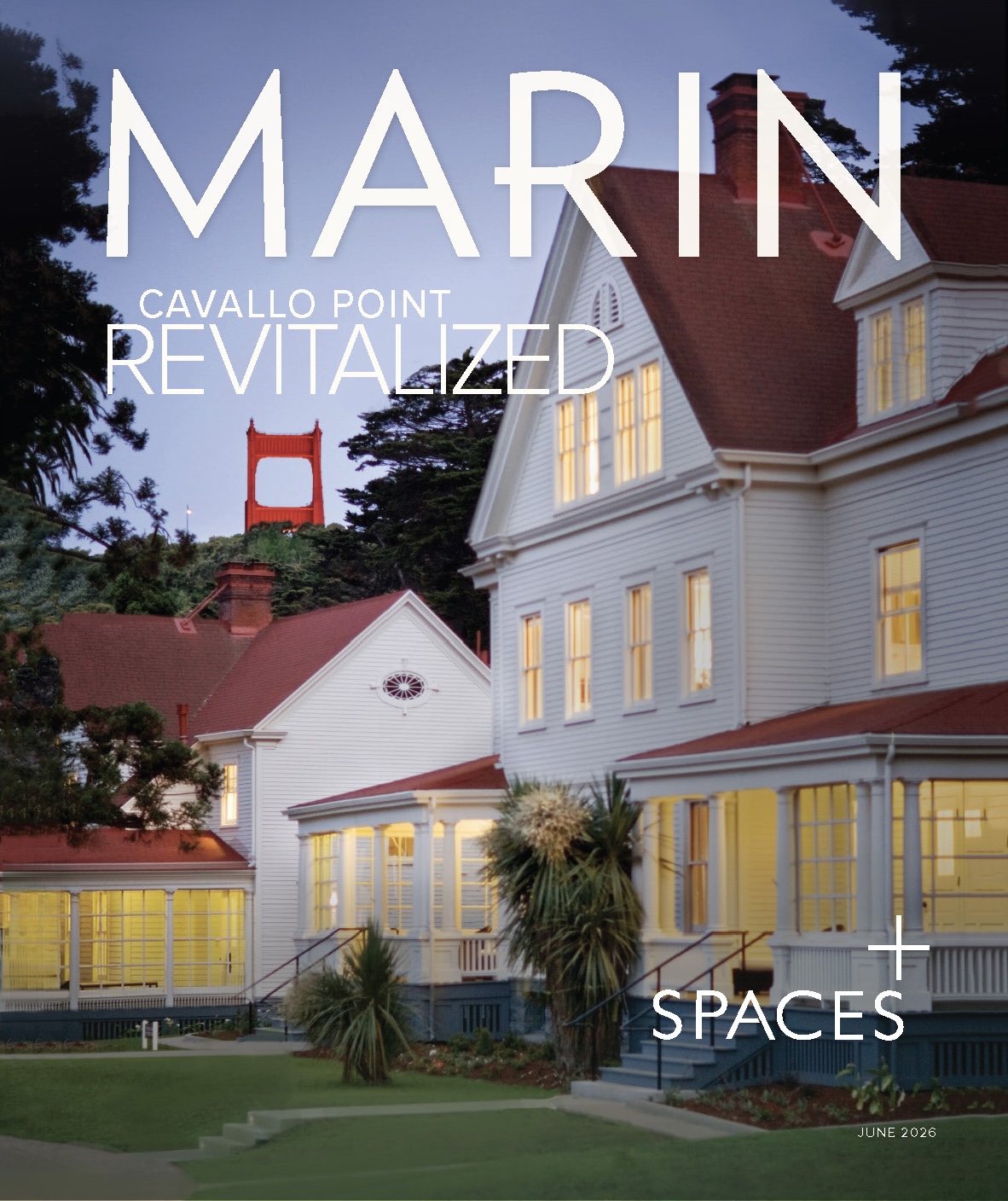
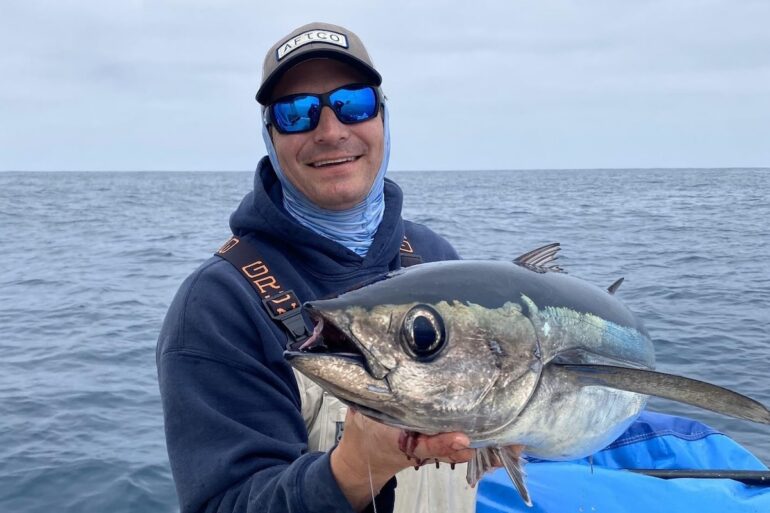
One chilly morning in 2022, Chef-Partner Ben Balesteri of Sausalito’s Poggio Trattoria was 60 miles off the California coast fishing tuna. After a day of near silence, Balesteri and his crew suddenly found themselves (and their boat) surrounded by tuna. “The fish were crashing and smashing into each other over a football field-size slice of the ocean,” Balesteri says. The crew had their rods ready when the boat was suddenly lifted straight into the air. “All I saw was a shadow of a cloud,” Balesteri says. A whale, attracted to the fish frenzy, had lifted Balesteri’s Grady-White fishing boat, Striker, straight out of the water. Seconds later the boat was back in the water, and the crew caught their breath just in time for Balesteri’s line to take off. A blue fin tuna was on the hook.
Balesteri’s fish story was just beginning. Hours later, he and his crew landed the 250-pounder. “All I can say is: it was gnarly. But we landed the beast,” he says.
A Passion for Water, a Life in the Kitchen

Long before becoming executive chef at Sausalito’s Poggio Trattoria, a post he’s held since 2013, Chef-Partner Ben Balesteri leaned into local food sourcing. His paternal Sicilian grandfathers were commercial fishermen out of Moss Landing and Monterey. On his mom’s side, a heritage of livestock and row crop farming. Everyone loved cooking big feasts for the family, and this seafood-focused, family-oriented upbringing never left Balesteri.
After high school he went to cooking school and embraced the culinary, fishing in-between cooking on the line. “When the motor is humming, it’s like the hood in the kitchen,” he says. “I get in the zone.”
Balesteri fully committed to the fishing life when he bought a boat in 2019 and, later that year, set up Balesteri Fish Co, Incorporated (an S-Corp), so Poggio Trattoria could adhere to the archaic procedures required for the restaurant to pay its chef for the fish he hand-caught, prepared and served to restaurant guests.
Sustainably Caught
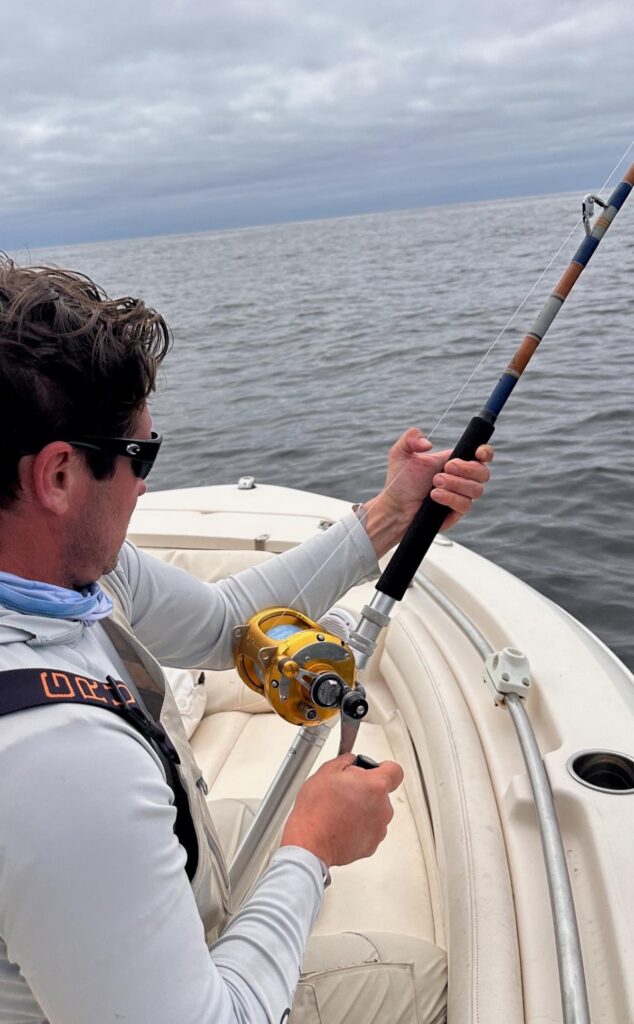
Bringing the Balesteri fishing tradition into the modern day includes sustainable practices, such as hook and line fishing, as well as handling the fish in the most humane way so it can be enjoyed as intended. Fish caught by Balesteri is slaughtered in the Japanese fashion known as Ikejime, whereby a spike is thrust down the spine, the fish is instantly killed, its nervous system stopped. This reduces cell degradation and preserves – even enhances – the flavor of the fish. “It’s only possible if you’re catching fish one by one with a rod and reel,” says Balesteri.
The result? One rod, one reel = flavor-forward.
Seasonal fishing is also top of mind for Balesteri, and this translates into which dishes are available on Poggio’s menu and when. Bluefin tuna typically shows up around July, moving up and down the coast until December. Meanwhile, Halibut season is in full swing by July and fades out around October, says Balesteri, while Albacore tuna arrives when the currents turn warmer, typically August, and hang around until October. “It depends on where the water temperature break is,” says Balesteri who watches for an edge of clear water to mark the season’s start.
Hand-Caught Fish on the Plate at Poggio

Though he can never catch as much seafood as the restaurant needs, Balesteri carries a commercial license for halibut, rockfish, ling cod, white seabass, blue fin tuna and albacore tuna. In addition to sourcing seafood from six local Sausalito fishermen and four different seafood companies, Poggio utilizes seafood caught by the crew on Balesteri’s boat and Balesteri Fish Company.
The hand-caught, never frozen fish turns up as specials which the team posts on Instagram and facebook @poggiotrattoria. Balesteri says he can sell out a 250-pound fish in days, and confirms that the restaurant’s most popular dish each night is whatever he caught the day before. “There’s something of a cult around these fish,” he jokes.
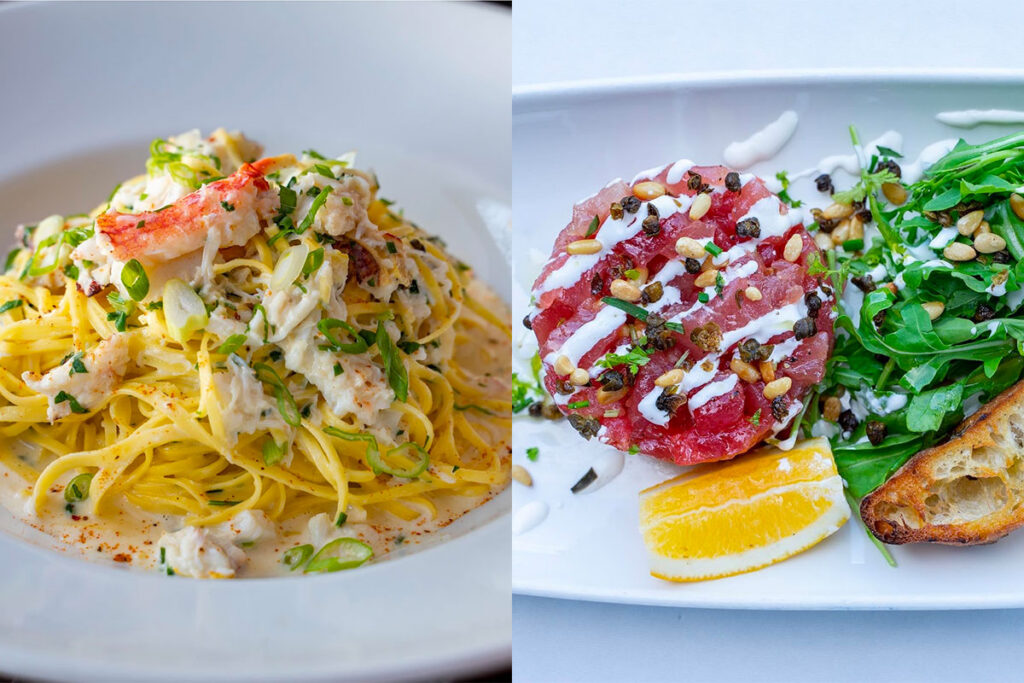
Perhaps this explains why the restaurant’s best-selling appetizer is seafood based – Tuna Tartare (raw fish) featuring Balesteri’s Bluefin when available, and sometimes Big Eye or Yellowfin from Hawaii. The restaurant’s best-selling entrée is also fin fish, often a white fish such as petrale sole or halibut.
This year, the Poggio team is also optimistic that, after three years of closure, the commercial salmon season will open once again in April. Even non-commercial fishermen only had a six-day season last year.
“There are glimmers of recovery among certain fisheries that were threatened by climate or overfishing,” Balesteri says. That’s a good thing because, on a busy Saturday, servers sell, on average, 100 pounds of fin fish dishes. Make that 150 pounds if shellfish are included.
A Bluefin steak, grilled rare over oak wood and served Castelvetrano olive tapenade with braised Iacopi Farms butter beans, baby artichokes, and preserved lemon, remains a novelty in Marin, its brethren overfished to the point where putting it on the menu invites risk. But a beautiful bluefin – hand-iced by Balesteri when he is lucky enough to catch it, seasoned with little more than sea salt, olive oil, and fried caper – is a sustainably harvested reminder that not all fish are created equal.
Optimism About the Future of Fin Fish
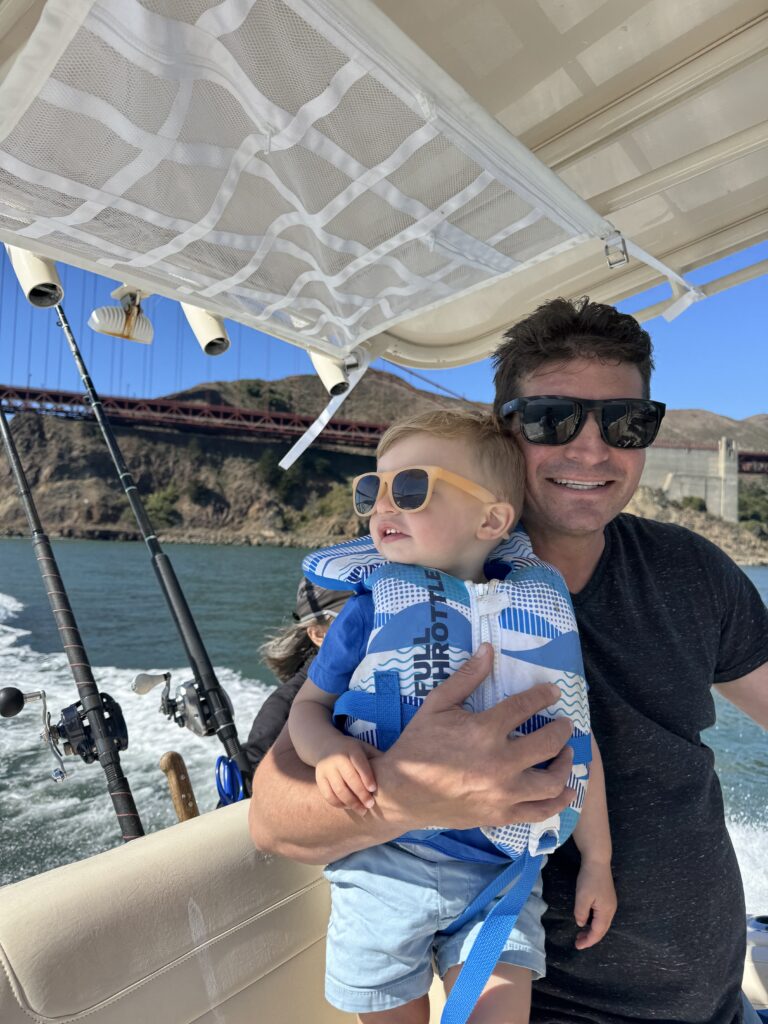
If you’re wondering about Striker, it sustained thousands of dollars in damages. After that whale ride, Balesteri took out a life insurance policy and continued to fish the Pacific. The chef at Sausalito’s beloved Italian restaurant takes the optimistic view of a sustainable future for our oceans. “Seafood is one the best foods on the planet,” he says and, increasingly, “it is available right here, harvested sustainably, along Marin’s coastline.”
As for the hand-caught seafood placed on your plate – well, that speaks for itself.