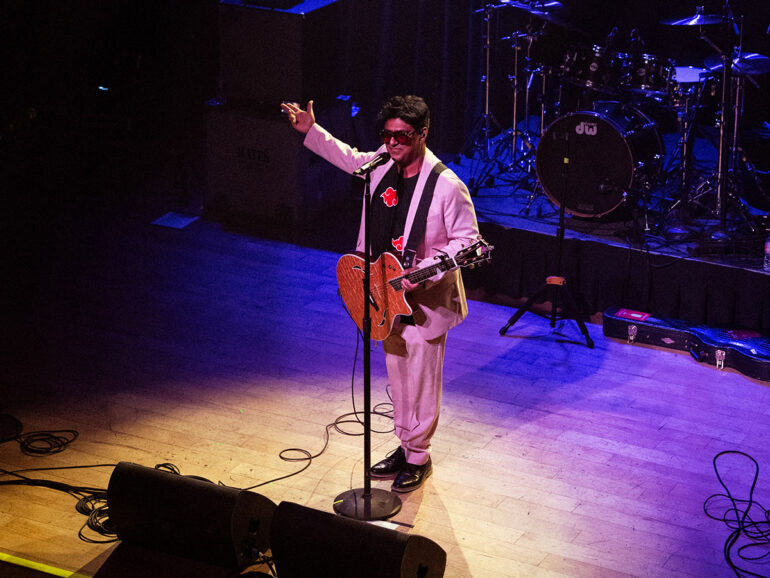
If you’ve ever seen Cowboy Bebop, played Resident Evil, or spent time in Japan in the 2000s, you’ve heard Raj Ramayya’s work. Cowboy Bebop? For those not immersed in the world of anime, it was the first Japanese anime franchise to make it big in the United States. Ramayya is also the voice of the character Bruce McGivern, in Resident Evil: Dead Aim, the 2023 video game. The Novato-based singer, composer, and lyricist spent years in Tokyo as one of the most in-demand session musicians in Asia. When a music project brought him to Mill Valley he fell in love with Marin and opened Strawberry Hill Studio, where he teaches high school kids the art of music production and voice acting for free.
How long have you lived in Marin and how did you make the decision to move here?
I’m originally from Saskatoon, Canada, but I’ve lived in Marin for about 17 years. Before that, I was living in Tokyo working full-time as a session singer, songwriter and composer for visual media including anime, video games, television commercials and film. As it turns out, one of my songwriting partners in Tokyo (my good friend, Brett Boyd) was originally from Mill Valley. He introduced me to American producer John Rewind, formerly of the Voodoo Rhythm Devils, and the chemistry was there. We started an alternative rock band called The Beautiful Losers and I came to California to record our debut album. Brett always used to rave about his hometown and he was right. I immediately fell in love with Marin and eventually started Strawberry Hill Studio here.
With scoring work, performing and teaching you seem to have three different careers going simultaneously. Was it organic or conscious?
It was a very conscious decision to diversify my career. After several decades of making a living as a freelance professional musician it was time for something new, especially with a growing family. I had always wanted to become an educator to share my experience. And I also always wanted to explore the world of studio ownership and entrepreneurship. Most of my family followed the traditional “business-minded” career path, so I guess I’d learned a lot from my folks over the years.
Those three paths — performing, teaching, and producing — have each brought me a tremendous amount of personal satisfaction in very different ways. They’ve all been challenging, but I think that’s exactly why they’ve been so rewarding. It keeps my life and career interesting from week to week.
In terms of “work” what does a typical calendar year look like for you?
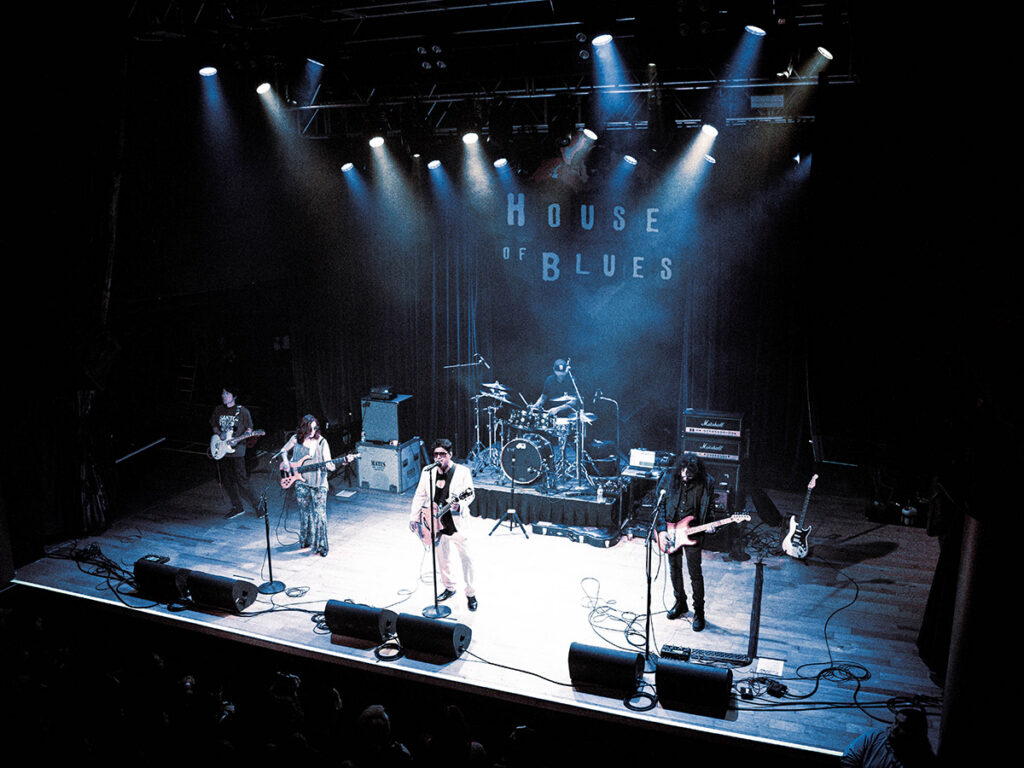
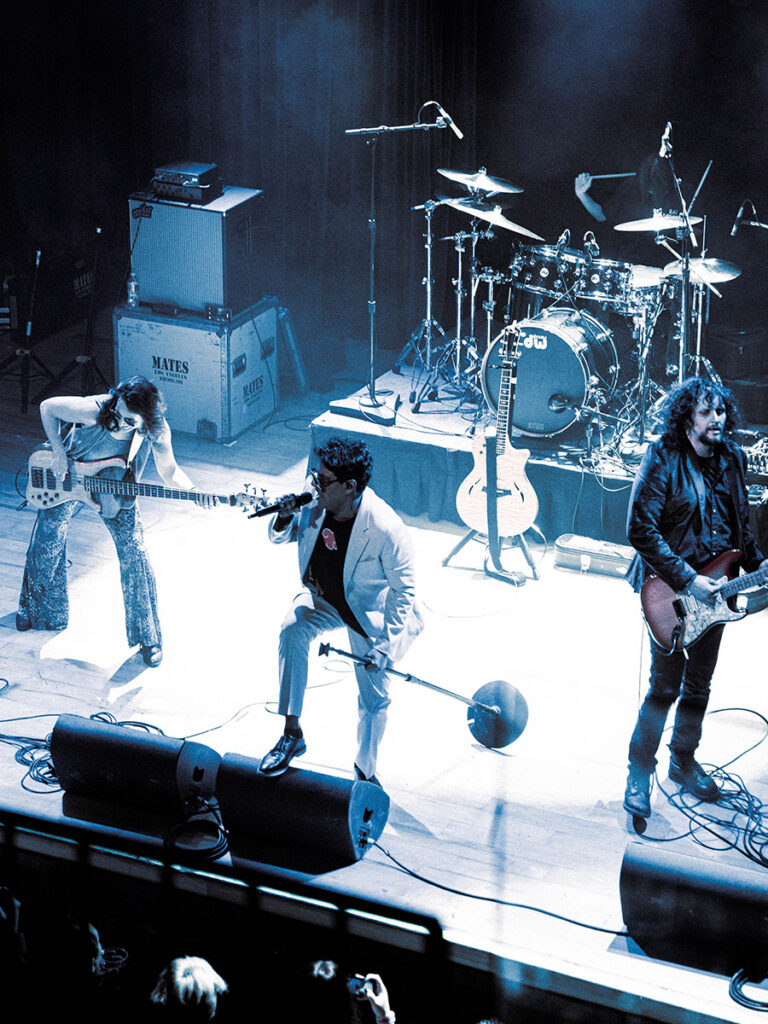
I typically spend about two or three months each year touring or performing one-off concerts. And for roughly six months of the year, I teach about music production and the music business, both through the Marin County Office of Education at Strawberry Hill Studio in Novato and at Academy of Art University in San Francisco. The rest of my time year-round is devoted to producing and composing for a wide variety of film, television, game and animation projects.
I find that this diversity keeps me engaged and constantly introduces me to interesting people. My students are an incredible source of inspiration and I’m always learning from them about what’s happening in the music and entertainment industries. The audiences at concerts keep me humble and on my game, while my fellow composers and producers continually remind me what dedication and hard work can accomplish.

When and how did your affiliation with the Marin County Office of Education (MCOE) begin?
It began in 2019 when I proposed the idea [of music production classes for high school students] to them and it’s been an incredible experience. The MCOE, and particularly Director Jesse Madsen, have been amazing supporters. They attend performances and have invested an incredible amount of time, resources and genuine care into the program. I always tell my students that this type of training would typically cost $3,000 to 4,000 if taken privately. Instead, MCOE not only covers the cost, but also offers high school credit for completing the program.
What’s unique or important about the Digital Audio Production program?
As a parent, I knew MCOE was supporting a variety of career education programs, but I noticed that music production wasn’t one of them. I remember thinking how cool it would be if I myself had some of these classes growing up. That was the catalyst. I worked closely with Jesse Madsen to build the program from the ground up.
What makes it unique is that students aren’t just learning in a classroom — they’re working in a professional recording studio. They have access to industry-standard equipment and receive more than 30 hours of guided instruction, while completing a real portfolio project. So at the end of their experience, they will have started their real “work.” That’s huge for a working musician or producer.
We also place a strong emphasis on practical skills like project management, client communication and financial literacy for creative professionals — subjects that are rarely taught but are essential for building a sustainable career. I can’t tell you how many colleagues and collaborators throughout my career could have benefited from some early bookkeeping classes.
How did “Samurais of Sound,” your neurodivergent voice acting program, come about? Is there a need for more specialized programs like this?
As Strawberry Hill Studio grew, it became clear that there were many talented neurodivergent individuals who simply hadn’t been given proper access to industry-quality training in a supportive environment. So we developed the program to combine professional voice acting instruction with individualized mentorship, portfolio development and real creative opportunities.
It’s designed to meet students where they are, while helping them build confidence, communication skills, and practical pathways toward employment in creative media. They are incredible kids who just needed a different kind of attention and teaching environment.
I absolutely believe there’s a need for more specialized programs like this. Every student deserves access to high-quality creative education, and many simply thrive when instruction is adapted to their strengths and learning styles.
Can you share some success stories from former students?
Some of my former students have gone on to become composers in Japan for well-known anime and video games. Others have built careers as recording engineers, producers, and songwriters, working with major artists including A$AP Rocky! We’re all so proud, as you can imagine.

What’s next for you as a composer and touring performer?
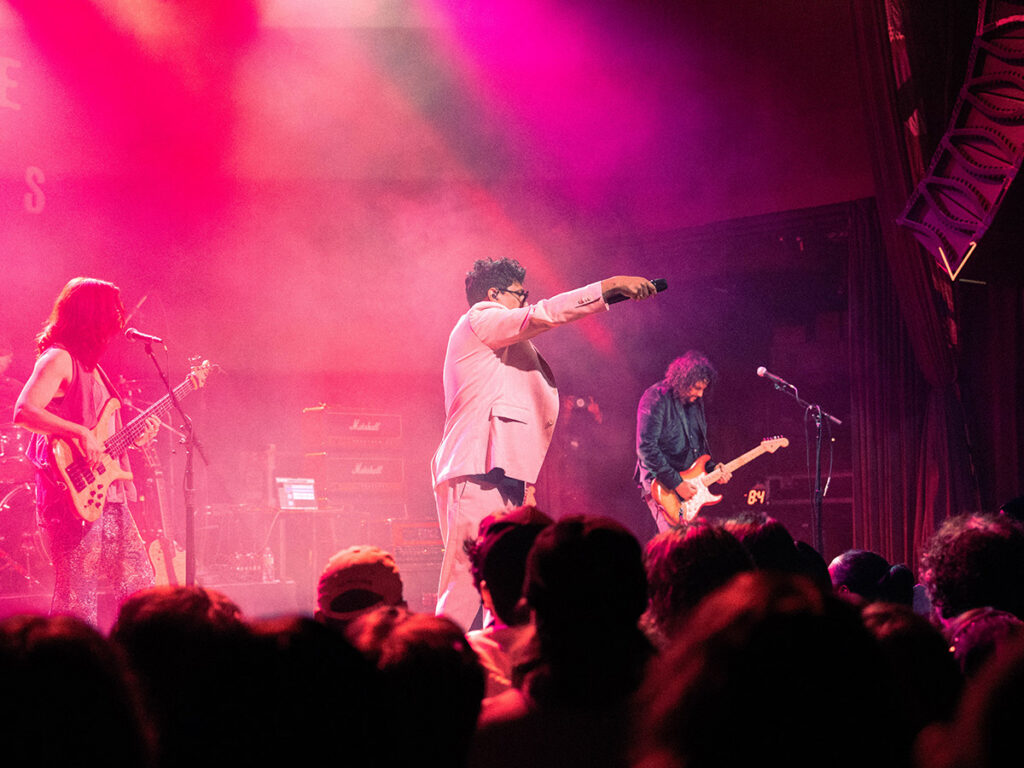
The past year was an amazing run of sold-out performances with Cowboy Bebop Live and several other projects. It was my biggest tour yet in the U.S. and my first in partnership with companies like Live Nation.
This summer I’m taking a step back from touring to finish a number of film and television projects and reconnect creatively before launching my newest live production, Anime Arcade Orchestra, in 2027. I think it’s going to be my most ambitious project yet — so stay tuned.
For more information, visit strawberryhillmusic.com and strawberryhillstudio.online.
From Raj: A few things that keep me inspired, laughing, and occasionally questioning reality…
Diary of a CEO Podcast
Great conversations with fascinating people. It’s a reminder that growth usually starts with listening to ideas that challenge your own.
If you’re a music nerd, welcome home. Brilliant breakdowns of why some songs hit you right in the soul.
How I Built This Podcast
Proof that most successful people started with a crazy idea, a lot of rejection, and a willingness to keep going. Comforting … and slightly terrifying.
I love funny dorks because, well, I’m one too. In a world that can feel a little unhinged, it’s healthy to laugh at ourselves once in a while.
While most sci-fi warns us about the future, Star Trek dares to imagine humanity actually getting its act together.
Yes, I get relentlessly teased for listening to Yacht Rock. Then a few weeks later, I notice those exact songs showing up on my kids’ Spotify playlists. Smooth always wins in the end.